
Tetramon
How to play Tetramon in TCG Card Shop Simulator: deck building at the workbench, the rulebook, element consistency, customer duels and tournaments.
Introduction
Tetramon is the card game inside the card shop, and the 1.0 release is what made it a real system rather than a decoration. You build a deck at the workbench, read the rulebook for the costs, turns and win conditions, and then duel your own customers in short matches that run a few minutes each. Because the opponents are the shoppers already walking your floor, deck strength and shop level are linked: customer decks scale as your shop grows, so a deck that wins comfortably on day ten stops being enough by the time your floor is full. This hub covers reading the rulebook before you build, why a consistent single-element deck tends to beat a spread of all four, how to tune a list against the opponents you actually face, and why keeping spare copies of your key cards is usually worth more than selling them.
Tetramon Systems At A Glance
| Topic | What We Know | Practical Takeaway |
|---|---|---|
| Deck building | Decks are assembled at the workbench from cards you own | Every kept card is one you cannot sell |
| Rulebook | Sits at the workbench and defines costs, turns and win conditions | Read it before building anything |
| Match format | Short duels against your own customers | Fits between shop tasks rather than replacing them |
| Opponent scaling | Customer decks scale with your shop level | Revisit your list as the shop grows |
| Multiplayer | No player-versus-player and no cross-platform matchmaking | Treat the mode as single-player progression |
| Tournaments | Added with the 1.0 release | The endgame target for a finished deck |
Playing The Game
The Rulebook
Read it before you build anything
Single-Element Decks
Consistency beats coverage
Opponent Scaling
Customer decks grow with your shop
Deck Economy
Every kept card is one you cannot sell
Tournaments
The endgame target for a finished deck
Match Format
Short duels against your own customers
Core Mechanics
Tetramon matches are short, turn-based duels between your deck and one of your own customers. The rulebook at the workbench defines costs, turn structure and win conditions, and it is worth reading before you build anything, because the deck construction rules constrain what a legal list can contain. Decks are built from the cards in your own collection, which ties the shop side of the game to the card game side: a card you sell is no longer available to put in a deck, and a card you keep is one you cannot sell. Energy and element identity matter more than raw card count, so a deck built around one element usually runs more consistently than a spread across all four. Opponents are generated from your customer base, and their decks scale with your shop level, so the difficulty curve tracks your progress rather than sitting still. There is no player-versus-player mode and no cross-platform matchmaking, so the competitive ceiling is the tournament structure that arrived with 1.0.
Advantages
Tetramon gives the collection a second purpose, which changes how you value the cards you pull. A card kept for a deck is worth more than its sale price if it is central to your strategy, and because matches are short and played against customers already in your shop, the system pays out in engagement as well as in progression. Deck building also creates a reason to buy product you might otherwise resell sealed, since opening packs is the way to acquire the specific cards a consistent list needs. The single-element approach keeps building cheap and legible: instead of trying to cover every situation, you build a deck that does one thing reliably, then adjust it against the opponents your own shop level generates. Because customer decks scale with your progress, the mode keeps offering a real test rather than becoming trivial, and the tournament structure added in 1.0 gives a completed deck somewhere to go. The whole system is optional, which is its own advantage: players who only want the management sim can ignore it and still run a successful store.
Challenges
The card game is the least documented system in the game, which is the main limitation on writing about it. It arrived with 1.0 and public information is still thin, so much of what can be said is structural rather than specific: the deck is built from cards you own, matches are short, opponents are your own customers and their decks scale with your shop level. The mode is also built around constraints that some players will find frustrating. There is no player-versus-player mode and no cross-platform matchmaking, so the only opponents available are NPC customers, and the competitive ceiling is whatever the tournament structure supports. Deck building competes directly with selling, since every key card you keep is a card you cannot sell, which makes a serious deck an investment rather than a free side activity. And because customer deck strength tracks shop level, a player who pushes the management sim hard can find the card game gets harder whether or not they kept their own deck up to date, which can leave a casual deck builder behind the curve.
Frequently Asked Questions
How do I play Tetramon?+
Is there multiplayer in Tetramon?+
Why does my deck keep losing?+
Quick Tips
Read the rulebook at the workbench before you build a single deck. It defines the costs, the turn structure and the win conditions the printed card game runs on, and building without it means constructing a list that looks strong but cannot actually be played legally or consistently. The rulebook is also the only authoritative source in the game for how the mode works, since public documentation of Tetramon is still very thin compared with the rest of the release.
Build around one element rather than spreading across all four. A single-element list repeatedly draws the cards that support its plan, while a spread deck frequently draws a mixture that does not combine into anything. Customer decks scale as your shop levels up, so a consistent list that you tune over time will keep pace far better than a broad one that never quite does anything reliably, and tuning a few cards is much cheaper than rebuilding from scratch.
Keep spare copies of the key cards in your deck instead of selling them. The cards you build with come out of your own collection, which means every copy sold is a copy you no longer have for a deck, and the singles that matter most to a list are usually the ones a customer would pay the most for. Holding a small reserve of your deck's core cards lets you adjust the list after a loss without having to buy or open product to replace what you sold.
Featured
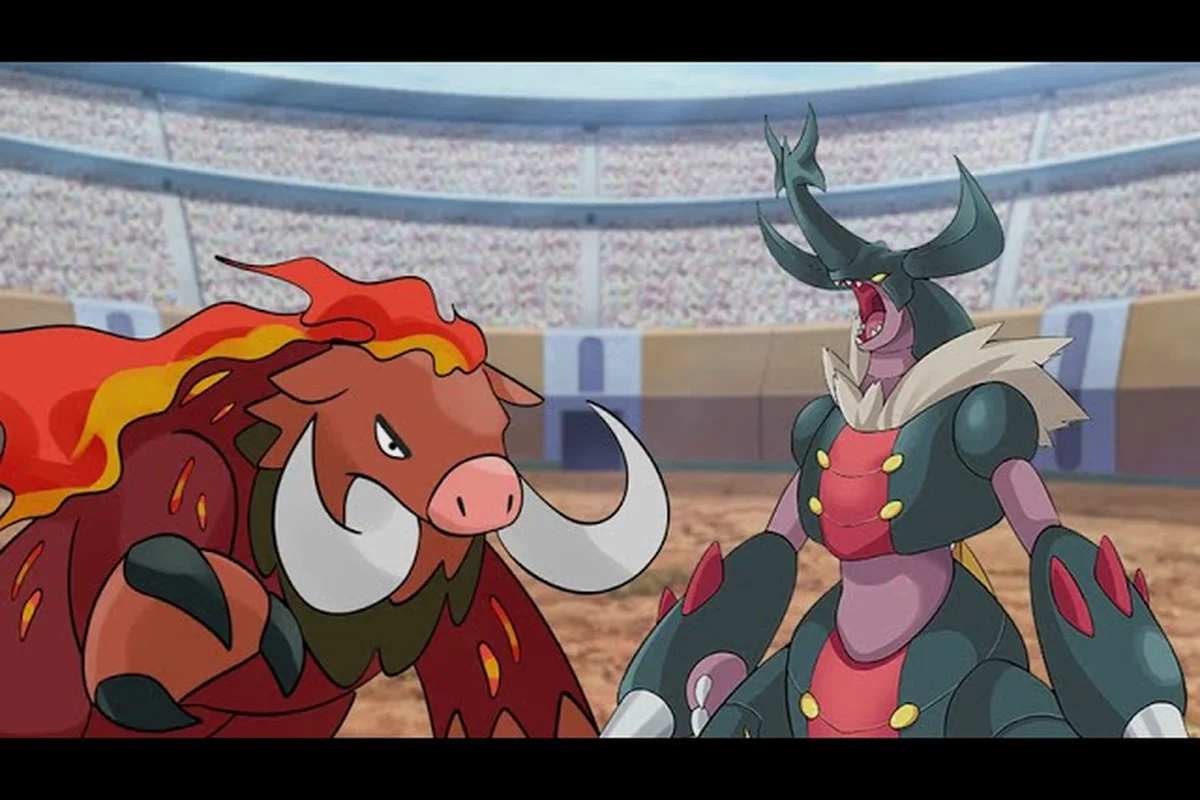
TCG Card Shop Simulator Card Game Guide: Tetramon Basics
Learn TCG Card Shop Simulator card game guide fundamentals, from building a Tetramon starter deck at the workbench to picking a single-element focus that wins duels.
TCG Card Shop Simulator Community Art Posters & 1.0 Drops
Explore TCG Card Shop Simulator community art posters found at the workbench, read Tetramon rulebook lore, and see which decks they spotlight.

TCG Card Shop Simulator Evolution Cards: Tetramon Strategy
Win TCG Card Shop Simulator evolution cards matches with proven Tetramon match strategy, tournament prep, and reward farming across the four elements.
All Articles
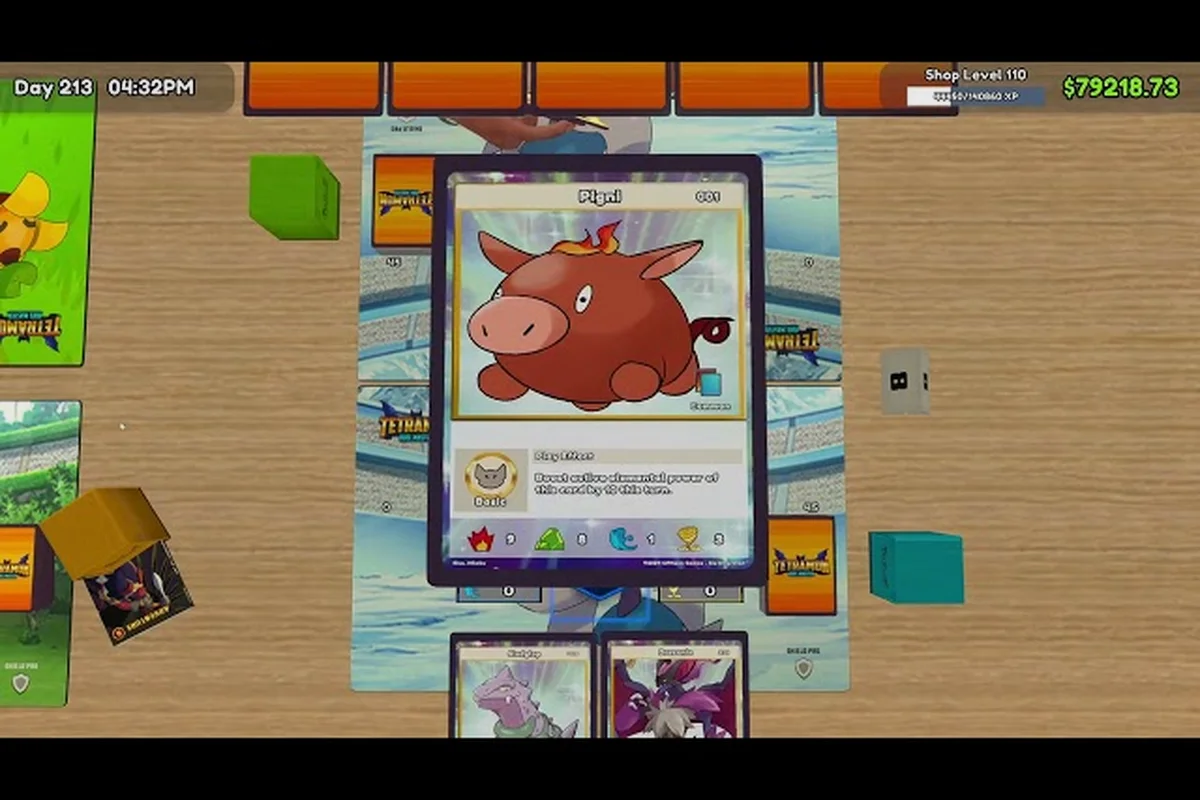
TCG Card Shop Simulator Match Rules: Damage Chart
Master TCG Card Shop Simulator match rules including card effects, damage calculation, and the Fire, Water, Earth, and Wind weakness chart that decides every duel.
TCG Card Shop Simulator Meta Deck: Aggro & Control
Pick the strongest TCG Card Shop Simulator meta deck across aggro and control builds, map the energy system, and find the card that defines the current tier.
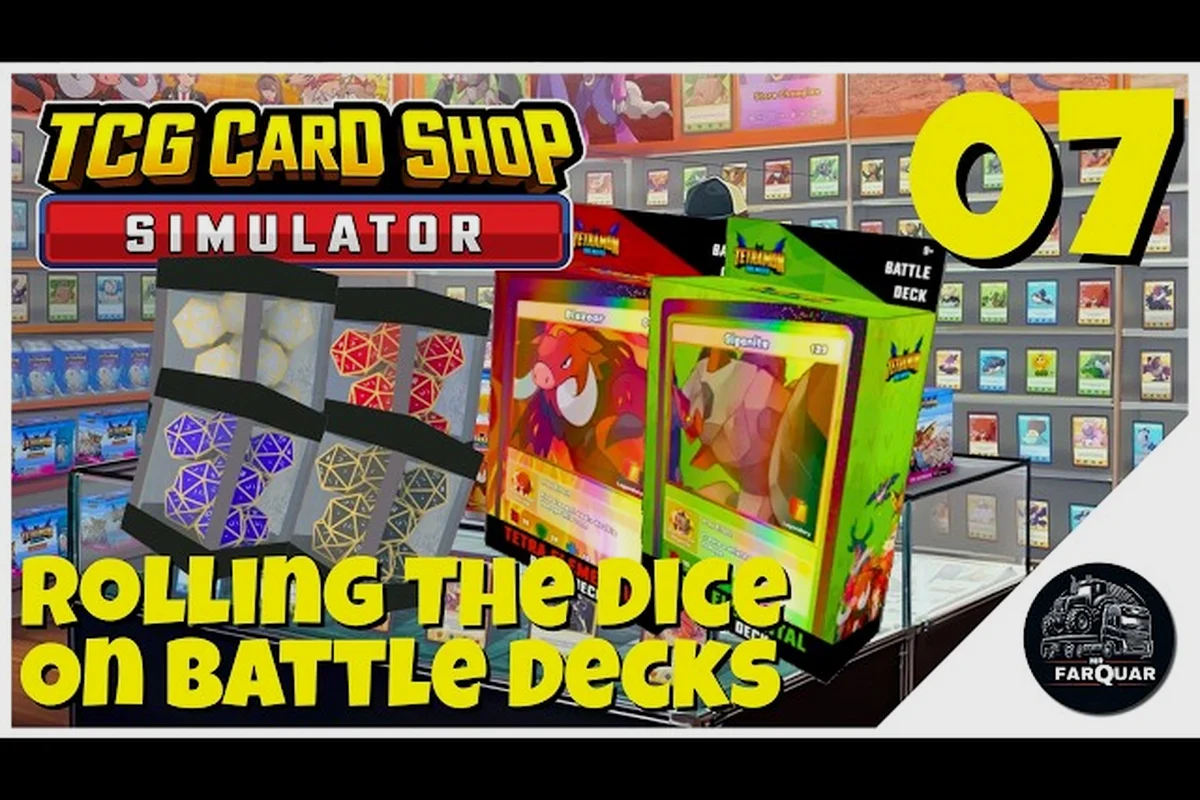
TCG Card Shop Simulator Turn Order: Retreat & Combos
Learn TCG Card Shop Simulator turn order flow including retreat cost math, status effect timing, and card combos that let you play Tetramon with friends in co-op.

TCG Card Shop Simulator NPC Opponents: Tetramon Hard Mode
Meet every TCG Card Shop Simulator NPC opponent across Tetramon duels, learn their element specialties, and pick a single-damage deck that beats hard mode.