
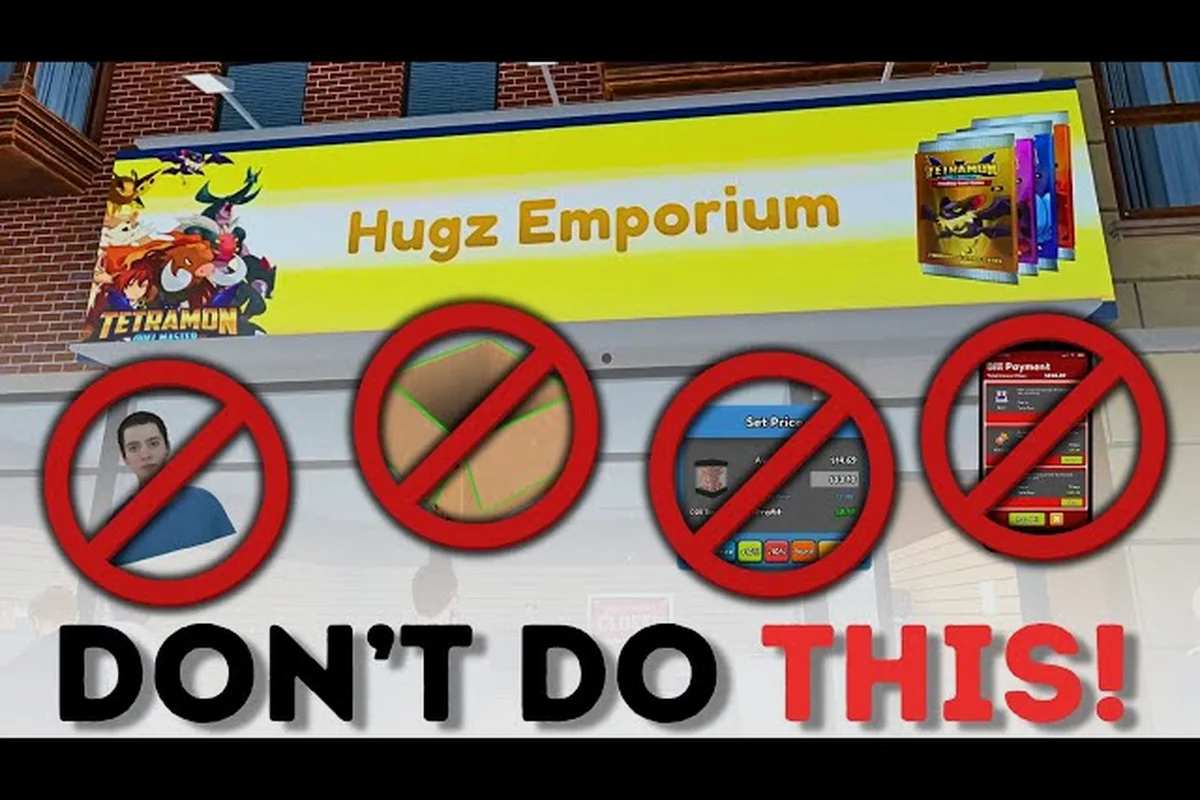
Why Most TCG Card Shop Simulator Newcomers Burn Through Their First Day
The single most expensive decision in any TCG Card Shop Simulator starter guide is treating the first shift as a sandbox. New clerks walk in, splurge on display shelves they cannot stock, leave the lights blazing across an empty floor, and watch their opening bankroll evaporate before the second customer arrives. According to the official Steam guide hub listing, the game shipped on September 15, 2026 after roughly two years of Early Access, holds up to 28 customers simultaneously, and spans a 4,436-card collection — so there is no shortage of things to spend on, and equally no shortage of ways to lose money fast.
A disciplined TCG Card Shop Simulator first day guide focuses on a different priority: protecting cash flow. The shop's two fixed operating costs — a flat per-counter daily fee and an electricity charge that accrues by the real-time minute — keep ticking whether the shelves are full or bare. Once you understand those two drains, every upgrade decision becomes a math problem instead of a vibe. The rest of this article walks through the specific TCG Card Shop Simulator mistakes to avoid across the early game and mid game, ranked by how much real money they cost new clerks.
Fixed Costs You Cannot Skip in the Early Game
Counter Fees vs Electricity Drain
The two baseline expenses behave very differently, and confusing them is the most common TCG Card Shop Simulator early game guide error. A counter fee is a flat daily charge per checkout lane you unlock, so it stops the moment you sell that lane back or close the shop. An electricity bill accrues every real minute the lights, coolers, and powered displays are on, which means a wide-open store with five empty display racks costs more per hour than a cramped two-shelf setup that is fully stocked.
| Cost Type | Trigger | Scales With | Stopped By |
|---|---|---|---|
| Counter Fee | Opening the shop with a lane active | Number of active checkouts | Closing the counter |
| Electricity | Lights and powered fixtures on | Wall-clock minutes | Power switch / closing hour |
| Restock Markup | Buying new booster inventory | Reorder quantity | Buying cheaper packs |
| Display Unlock | Adding a new shelf or rack | Floor space purchased | None (one-time) |
The practical takeaway: open only one counter on day one, and flip the lights off the second the last customer leaves. Players on the official TCG Card Shop Simulator YouTube channel consistently stress throughput over square footage in their first-day walkthroughs, because every spare minute of electricity is a minute you are paying rent for empty air.
The Expansion Trap on Day One
Buying a second shelf before the first one is full converts profit into floor space. The shelf itself is cheap relative to the inventory needed to fill it, but the electricity overhead of a larger lit footprint compounds. A common TCG Card Shop Simulator mid game guide rule of thumb is to wait until a shelf is selling at least 70 percent of its capacity during peak hours before unlocking a second one. If customers are already bouncing because the requested card is out of stock, that is a restock problem, not a footprint problem.
| Shop Stage | Recommended Shelves | Recommended Counters | Common Mistake |
|---|---|---|---|
| Day 1 | 1 starter shelf | 1 counter | Unlocking 3+ shelves "for variety" |
| Week 1 | 2–3 shelves (full) | 1 counter | Adding a second counter before traffic justifies it |
| Month 1 | 4–5 shelves (restocked daily) | 2 counters | Skipping the grime-cleanup loop |
| End of Month 2 | 6+ shelves, themed zones | 2–3 counters | Ignoring tournament day prep |
This is also where many clerks fall into the TCG Card Shop Simulator beginner mistakes pattern of treating unlockable content as a checklist. Buying a tournament organizer license on day three, for example, only matters once you have enough unique inventory to actually host a meaningful event. Until then, that license is just a recurring daily fee against zero revenue.
Pricing, Overpricing, and the Sales Velocity Curve
Why Doubling Your Markup Halves Your Customers
Pricing in this game is closer to an elasticity curve than a flat slider. A modest markup on a hot card still moves units; a punitive markup on the same card drives the customer to the back of the queue, then out the door. According to community data shared on the TCG Card Shop Simulator subreddit, clerks who price mid-tier rares more than 35 percent above the suggested baseline see a measurable drop in foot traffic within the same shift.
| Pricing Tier | Markup vs Suggested | Customer Behavior | When It Works |
|---|---|---|---|
| Loss Leader | 0–5% | Sells out in minutes | Starter decks on day one |
| Standard | 10–20% | Steady traffic, full sell-through | Default for most singles |
| Aggressive | 25–40% | Slow trickle, niche buyers | Trophy rares only |
| Price Gouging | 50%+ | Customers leave queue | Almost never sustainable |
The dangerous moment is the first big sale. You finally get a high-value buyer, you push the price 60 percent above suggested, and the profit feels enormous. Repeat that pattern, and by mid-game your customer flow has thinned to a trickle because word-of-mouth (in the form of the shop's reputation meter) is taking a hit. Treat the suggested price as a soft ceiling for daily inventory, and reserve the aggressive markup for genuinely rare trophy pulls that a collector cannot find anywhere else.
The Restock Cliff
Every restock order carries a markup. Buying the same booster type twice in one day costs noticeably more the second time, because the supplier interprets urgency as willingness to pay. New clerks who notice the first shelf going empty often panic-buy at peak markup, which drains the bank faster than the customers they are trying to serve can repay it.
| Restock Pattern | Cost Impact | Revenue Impact | Net Effect |
|---|---|---|---|
| Order when shelf is 80% full | Normal cost | Customers always find stock | Steady profit |
| Order when shelf is 20% full | Normal cost | Brief stockout losses | Minor |
| Order same pack twice in one shift | ~25% markup penalty | Same sales | Significant loss |
| Skip restock entirely for 2 days | None | Chronic stockouts | Reputation damage |
A solid TCG Card Shop Simulator starter guide routine is to check inventory levels at the start of every shift, not the middle. Ordering at the open of business locks in the normal price, and gives the rest of the day to actually sell what arrived.
Shop Hygiene, Grime, and the Reputation Spiral
How a Dirty Floor Costs You Sales
The grime mechanic is the silent killer of the mid game. Trash, spilled drinks, and scuff marks accumulate around the checkout counter and the display shelves, and once the grime meter crosses a threshold, customer patience shrinks. Rushed customers buy fewer items, complain more, and tip less. Cleaning supplies cost money, but they cost less than the sales you lose to a foul-smelling shop.
| Grime Level | Customer Patience | Average Basket Size | Tip Rate |
|---|---|---|---|
| Clean (0–20%) | Full | 4–6 cards | Normal |
| Dusty (20–50%) | Slight reduction | 3–5 cards | Slightly down |
| Filthy (50–80%) | Noticeably rushed | 2–3 cards | Minimal |
| Hazard (80%+) | Customers walk out | 0–1 cards | None |
A clean shop also lets you catch shoplifters more reliably, which feeds back into the profit line. The loop is simple: clean floor → patient customers → larger basket → more revenue → budget for a second mop → repeat.
When to Hire Help
Hiring a clerk is a major mid-game unlock, and the timing matters. Bringing on a paid helper too early means you are paying a salary out of a bankroll that should be going into inventory. Bringing them on too late means you are personally handling every checkout, every restock, and every mop pass, which is how burnout-induced misclicks start eating into profits.
| Trigger | Hire a Clerk? | Reasoning |
|---|---|---|
| Single counter, 1 shelf | No | You can solo this easily |
| Two counters, 3+ shelves | Borderline | Only if shifts feel chaotic |
| Three counters, tournament hosting | Yes | Manual play becomes a bottleneck |
| Endgame multi-zone layout | Definitely | Floor management is the limiting factor |
For clerks approaching this decision, a focused walkthrough of how to avoid bankruptcy in TCG Card Shop Simulator pairs well with the daily cash-flow habits above — bankruptcy is almost always the downstream symptom of one of the early mistakes in this list, not a separate problem.
Inventory, Deck Building, and the Tournament Day Setup
What to Stock First
The starter inventory is intentionally narrow. You begin with a handful of common-tier cards from a single set, and the temptation is to scatter restock orders across every available booster type. Resist that. New customers walk in asking for cards from the set you already stock, and if you do not have those, they leave. Doubling down on your starter set until you can reliably fill 90 percent of walk-in requests is the fastest way to grow daily revenue.
| Stocking Strategy | First-Week Revenue | Reputation Trend | Verdict |
|---|---|---|---|
| One set, deep stock | High and rising | Strong upward | Best for week one |
| Two sets, shallow stock | Moderate | Volatile | Risky for new clerks |
| Every set, scattered | Low | Stagnant | Worst early-game pattern |
Once you have a stable customer base that knows your shop as "the place for Set X cards," you can branch out into adjacent sets. The shift from single-set specialist to multi-set general is the natural transition from TCG Card Shop Simulator early game guide territory into the TCG Card Shop Simulator mid game guide phase.
Tournament Prep as a Mid-Game Profit Lever
Tournament days are the single biggest revenue spike available before the late game, but they require three things to be in place: a stocked singles inventory, a registered organizer license, and a clean shop with at least one staffed second counter. Skipping any of the three turns a tournament from a profit event into a customer-service disaster.
| Tournament Prep Checklist | Status |
|---|---|
| Singles inventory covers top 20 played cards | Required |
| Display shelves themed to event format | Strongly recommended |
| Extra clerk on shift for the event window | Recommended |
| Trash bins emptied, floor mopped | Required |
| Entry fee priced within player expectations | Required |
For a deeper look at the playable card game layered on top of the shop sim, the Tetramon card game guide walks through the deck-building and tournament format specifics that determine what singles your customers actually want to buy in the first place.
Tuning Your Long-Term Routine
A Daily Loop That Actually Compounds
The mid-game clerks who pull ahead financially are not the ones with the biggest shops — they are the ones with the most consistent daily loop. Open, restock at normal price, clean the floor, run the counter, close the power. Repeat for a week, and the compounding savings on electricity and rush-restock markups are larger than any single expensive upgrade.
| Daily Action | Time Cost | Money Saved | Priority |
|---|---|---|---|
| Order restock at shift open | 30 seconds | ~25% markup avoided | High |
| Sweep + mop mid-shift | 1 minute | Reputation + tips preserved | High |
| Flip power off at close | 5 seconds | Full electricity savings | High |
| Adjust prices to 15–20% markup | 30 seconds | Stable customer flow | Medium |
| Review yesterday's sales log | 1 minute | Spot slow movers | Medium |
A first-time clerk who treats the above as muscle memory will out-earn a careless veteran running a larger shop every single day, because the fixed-cost leaks are where margins go to die.
When to Stop Expanding and Start Specializing
Past a certain footprint, additional shelves stop adding meaningful revenue. The signal is that the new shelf sits below 30 percent sell-through for a full in-game week. At that point, the shelf is a net loss after electricity and restock markup, and the right move is to convert that floor space to a higher-margin use — a tournament corner, a singles binder display, or a sealed-product showcase — instead of a fifth rack of the same booster type.
For clerks already eyeing the post-mid-game economy, the late game progression guide covers how the same daily-loop discipline scales when your bankroll finally clears the seven-figure mark, and what shifts once raw cash stops being the binding constraint.
Frequently Asked Questions
What is the single most expensive TCG Card Shop Simulator mistake to avoid on day one?
Unlocking extra shelves and a second counter before the first shelf is fully stocked. The electricity cost of a larger lit footprint and the daily counter fee drain the bank faster than a single counter with one full shelf can repay, and the expansion will not boost revenue because you have nothing new to sell.
How often should I restock inventory in the early game?
Restock once per shift, right at opening, so you lock in the normal supplier price. Re-ordering the same booster type later in the same day triggers a markup penalty of roughly 25 percent, which compounds quickly across a week of shifts.
Does shop cleanliness actually affect revenue in TCG Card Shop Simulator?
Yes, directly. Once the grime meter climbs past 50 percent, customer patience drops, basket sizes shrink from 4–6 cards to 2–3, and tip rates collapse. A quick mid-shift mop preserves both reputation and daily tips, and it is one of the cheapest fixes in the entire game.
When is the right time to hire a paid clerk in the mid game?
Hire when you are reliably running two or more active counters during peak hours and cannot keep up with restock and cleaning between customer waves. Hiring earlier means paying a salary from a bankroll that should be funding inventory, and waiting too long means manual misclicks start eating into margins.
Can I recover from bankruptcy caused by these early mistakes?
Yes, but recovery is slower than avoiding the mistake in the first place. The fastest reset is to sell any over-expanded floor back to a single shelf, cancel the second counter, and rebuild from a lean one-counter loop until the bankroll is back above the safe threshold covered in the bankruptcy guide.