
Workers
Every TCG Card Shop Simulator worker ranked: unlock levels, checkout and restock speeds, hire fees against daily salaries, and how to split duties.
Introduction
Hiring is the moment your shop starts running while you do something else, and it is also the moment your fixed costs jump. Nine workers unlock between shop level 10 and level 45, each with their own checkout speed, restocking speed, one-off hire fee and daily salary. None of them is simply the best at everything, so the strongest rosters split duties: one fast till operator to keep queues short and one fast restocker to keep shelves full, rather than stacking your most expensive all-rounder in a single role. This hub covers who is worth hiring and when, how the hire fee compares with the salary over a realistic payback window, which workers are genuinely useful early despite poor overall stats, the price adjustment duty that makes one of the cheaper hires worth keeping, and the save-timing quirk that can wipe your duty assignments after closing.
Worker Roster By Tier (community data)
| Worker | Tier | Duty Profile | Cost Note |
|---|---|---|---|
| Axel Charleton | S | Best checkout and best restock in the roster | Five-figure hire fee and a high salary |
| Clark Cash | A | Top-tier specialist in one duty | Reported to be able to leave early |
| Angus Mick | A | Top-tier specialist in the other duty | Worth pairing with a till specialist |
| Benji Otto | B | Fast at both duties | Flexible mid-game hire |
| Lauren Posie | B | Fast at both duties | Flexible mid-game hire |
| Dennis Brandon | C | Solid all-rounder | Bridges the gap while saving |
| Alexander Cole | C | Solid all-rounder | Bridges the gap while saving |
| Zackery Cole | D | Slow overall, often kept for price adjustment duty | Cheap hire, useful early |
| Terence Fay | D | Slow overall | Cheap early help |
Staff Roster
Axel Charleton
Top of the roster in both duties
Clark Cash
Specialist at the top of one duty
Angus Mick
Specialist at the top of the other duty
Benji Otto
Fast at both duties
Lauren Posie
Fast at both duties
Dennis Brandon
Solid all-rounder
Alexander Cole
Solid all-rounder
Zackery Cole
Slow, but often kept for price adjustments
Terence Fay
Cheap early help
Core Mechanics
Workers are assigned to duties rather than to fixed posts, and the two duties that matter are the checkout and restocking. Checkout speed determines how quickly a queue drains, and a queue that reaches the door loses paying customers regardless of how good your prices are. Restocking speed determines how quickly an emptied shelf is refilled, and an empty shelf is a sale that never happens even if the product is sitting in your warehouse. Each worker has a different pair of speeds, so a specialist who is excellent at one duty is often mediocre at the other, and the strongest roster pairs a fast till with a fast restocker instead of hiring the single best all-rounder twice. Cost comes in two parts: a one-off hire fee and a recurring daily salary, and the hire fee is the number that decides when a worker becomes affordable rather than the salary. Some cheaper hires exist mainly for price adjustment duty, and one save quirk is worth knowing before you rely on the system: duty assignments are not retained if you save after closing time.
Advantages
The value of hiring is that it converts your own attention into a scalable resource. Before workers, every sale depends on you standing at a register, which caps your income at your own walking speed; after workers, the shop keeps selling while you open product, build decks or plan the next expansion. Splitting duties is what makes that leverage work, because hiring two specialists costs less than hiring two of the most expensive all-rounder and produces better throughput in both roles. The tiering also gives you a sensible purchase order rather than a best-in-slot list to chase: cheap generalists bridge the gap while you save, flexible mid-tier hires cover whichever duty is currently your bottleneck, and the single dominant performer becomes worth the hire fee only once his salary is small relative to your daily revenue. Because costs split into a one-off fee and a recurring salary, you can evaluate a hire against a realistic payback window instead of against your bank balance, which keeps staffing decisions reversible and cheap to correct.
Challenges
Hiring is the point where a shop's costs become structural. A worker's daily salary is charged whether the shop is busy or not, so wages plus the per-counter fee plus electricity form a fixed drain that has to be covered before a single unit of profit exists, and a roster hired too early converts a healthy balance into a slow bleed. The top of the roster is also gated behind cash as much as level: the strongest checkout and restock performer in the game carries a five-figure hire fee and a salary to match, which makes him a late-game purchase that a mid-game shop cannot recover the cost of. Information about the roster is imperfect as well, since the widely cited worker table was last edited during Early Access and the community wiki is internally inconsistent about at least one worker's name and about whether the recruitment achievement needs eight or nine staff. That inconsistency matters if you are planning a payback calculation from community numbers rather than from your own save, and the save-timing quirk around duty assignments adds a fourth risk that can silently undo work you have already done.
Frequently Asked Questions
When should I start hiring workers?+
Who is the best worker in TCG Card Shop Simulator?+
Why did my workers forget their duties?+
Quick Tips
Split duties across two workers instead of hiring one expensive all-rounder for both. Checkout speed and restocking speed matter in different moments, and a worker who is excellent at one is usually only average at the other. Two specialists cost less than two copies of the top-tier hire and produce better throughput in both roles, which is why the strongest rosters in the game look like a pairing rather than a collection of the biggest names available.
Judge a hire by its payback window, not by your bank balance. Costs come in two parts, a one-off hire fee and a recurring daily salary, and the fee is what makes a worker feel unaffordable while the salary is what actually decides whether the hire was worth it. Compare the daily wage against the daily revenue the worker adds by clearing queues or keeping shelves stocked, and prefer hires whose cost is covered easily by ordinary trading rather than ones that only work on a very good day.
Save before you close the shop, not after. Duty assignments are reported not to be retained if you save after closing time, so an end-of-session save can wipe every role you set during the day and leave you re-assigning the whole roster before trading resumes. Making the save part of your closing routine rather than something you do afterwards takes seconds and protects a meaningful chunk of the next session's setup time.
Featured

TCG Card Shop Simulator Staff Guide: Hiring & Tiers
Build your dream team with this TCG Card Shop Simulator staff guide, covering the Go Recruit app, worker tier rankings, and fastest checkout employees.
TCG Card Shop Simulator AFK Money: Cashier Staff Setup
Earn TCG Card Shop Simulator AFK money with the right NPC cashier and staff roster mix, balancing worker salary against passive register income.

TCG Card Shop Simulator Benji Otto: Mid-Game Hire
Evaluate TCG Card Shop Simulator Benji Otto against flexible peers to decide where he fits in your full worker roster.
All Articles

TCG Card Shop Simulator Worker Cost: Hire Fees & Payback
Break down TCG Card Shop Simulator worker cost across all nine hires, compare hire fees against daily salaries, and judge whether staff actually pay for themselves.

TCG Card Shop Simulator Worker Schedule: Shifts
Set a TCG Card Shop Simulator worker schedule that automates checkout and restocking without staff leaving early, and fix the pathing bugs that break shifts.
TCG Card Shop Simulator Worker Unlock Level: 10-45
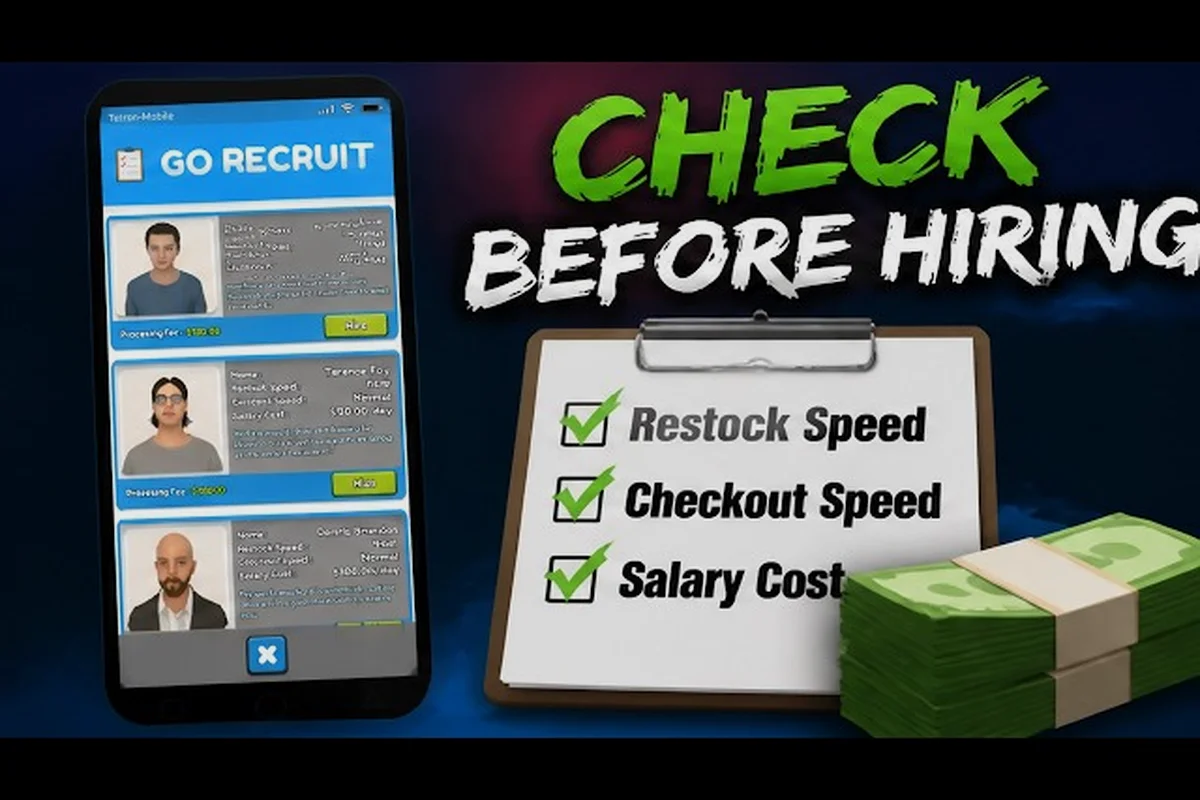
Plan your TCG Card Shop Simulator worker unlock level from shop level 10 through 45, meeting Zachary Cole, Terence Fay, Dennis Brandon, Clark Cash, and Angus Mick.

TCG Card Shop Simulator Worker Wages: Salary
Manage payroll smartly with this TCG Card Shop Simulator worker wages guide, covering hire fees, restock versus checkout tradeoffs, and signs it's time to fire.