
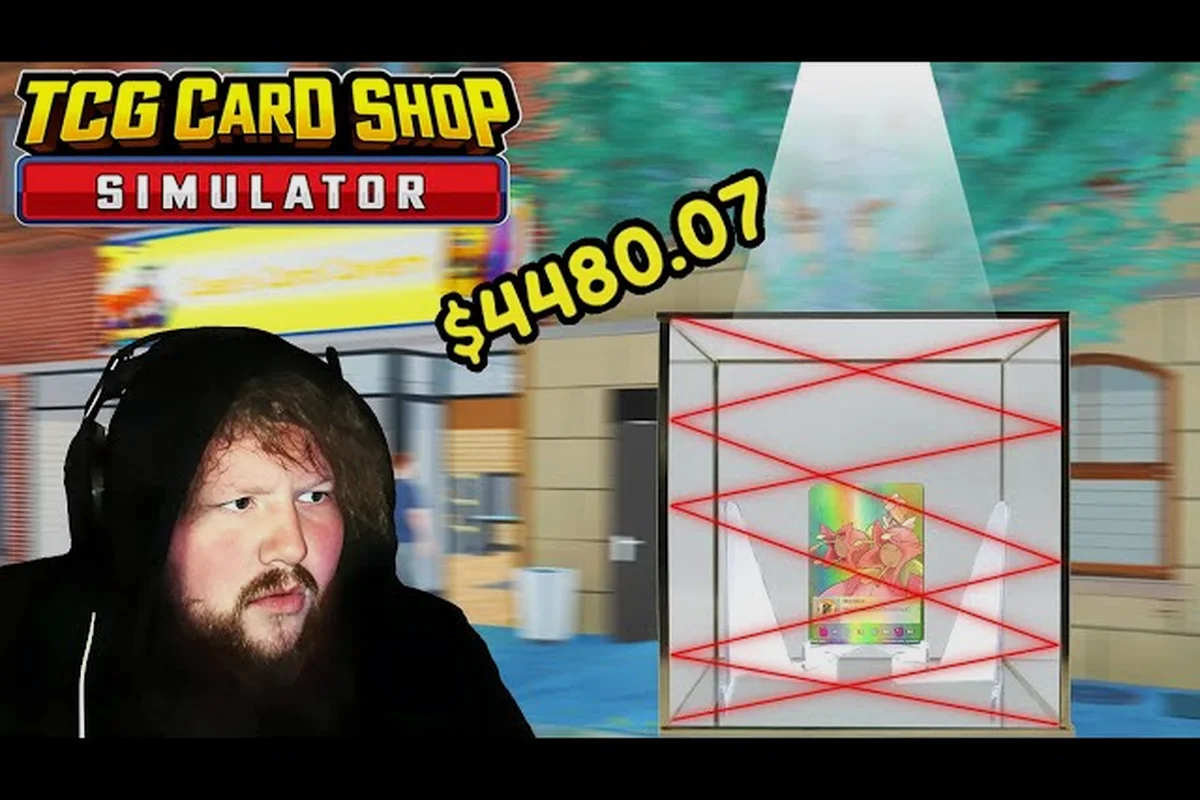
Running a card shop in TCG Card Shop Simulator looks deceptively simple on day one, but the economy underneath is a layered system of fixed costs, dynamic events, and inventory churn that can drain your register in a single bad week. According to community data, most first-time owners go bankrupt before unlocking Shop A, and the majority who survive long enough to expand still bleed cash through the mid-game because they scale expenses faster than revenue. This TCG Card Shop Simulator how to avoid bankruptcy playbook breaks the lifecycle into three phases — early, mid, and endgame — and maps every cash leak to a specific fix so you can reach your first million dollars without ever seeing the "Game Over" screen.
Early Game Cash Flow: Surviving the First Seven Days
The first week in TCG Card Shop Simulator looks forgiving because customers trickle in slowly, the shop fits eight chairs, and your starting inventory only contains a few hundred cards. Beneath that calm surface, two clocks are already running: a per-minute Electricity bill that grows with every shop expansion, and a flat daily fee charged for every active checkout counter. According to the official official Steam store listing listing, the game launched in full release on September 15, 2026, after two years of Early Access, which means every economy value below has been tuned against a live player base for months.
The Two Fixed-Cost Clocks
Every new shop owner needs to internalize the difference between these two drains before optimizing anything else, because they respond to different levers and punish different mistakes. Electricity is a per-real-minute tax that compounds the moment you open the door — base load plus per-Shop A expansion and per-Shop Lot B surcharges — so an overnight AFK session can silently erase a slow Tuesday's register total. The Checkout Counter Fee, by contrast, is a flat daily bill per active counter that punishes early-game owners who buy a second register before their first is queuing, locking in fixed overhead with no offsetting throughput. Treating electricity as a runtime clock and counter fees as a subscription cost is the mental model that keeps a new card shop from bleeding into bankruptcy before the expansion packs ever restock.
| Cost Type | How It Scales | When It Hurts Most | Cheapest Mitigation |
|---|---|---|---|
| Electricity | Per real minute, base + per Shop A expansion + per Shop Lot B expansion | Long idle sessions, overnight AFK | Close the shop during off-hours |
| Checkout Counter Fee | Flat daily bill per active counter, regardless of traffic | Early game when you only have 2-3 counters | Keep one counter active until you can justify a second |
Players who leave the shop open overnight to accumulate sales often wake up to a negative balance because electricity alone can outpace a slow Tuesday's revenue. The single best early-game habit is to treat the shop like a real storefront: open during peak hours, close before the per-minute bill exceeds hourly profit, and never buy a second checkout counter until the first is consistently queuing.
Inventory Rules Before Day 8
Your starter cash is finite — usually around $500 on day one before rent and electricity deductions — and the early game punishes owners who diversify too quickly into high-rarity boxes. The profitability gap between a Common Booster sold at a 25% markup and a Premium Holo Box sitting unsold for three days is roughly $8 to $15 in lost working capital per unit, which is why community-tracked margins on day-one shelves shift so dramatically across the three product categories available from the start.
| Product Tier | Avg. Cost | Safe Markup | Risk of Sitting | Recommended Buy Volume |
|---|---|---|---|---|
| Common Booster | $8-$12 | 20-30% | Very low | Buy out the full shelf |
| Rare Booster | $25-$40 | 15-25% | Moderate | Two boxes, no more |
| Premium Holo Box | $60-$100 | 10-15% | High (sits 3+ days) | Skip until week 2 |
The early game golden rule is sell-then-buy. Let the shelf empty, then restock with proven sellers, because sitting inventory ties up cash that should be paying tomorrow's electricity. Players who front-load premium holo boxes before the customer base exists routinely report TCG Card Shop Simulator losing money within the first 48 hours.
The Mid-Game Scaling Trap: Why Expanding Too Fast Bankrupts You
Once you unlock Shop A and start hiring staff, the game enters its most dangerous phase. Revenue roughly doubles, but fixed costs triple because electricity now charges a per-expansion surcharge, every new counter adds another daily fee, and employees draw wages even on dead shifts. This is the window where the majority of TCG Card Shop Simulator losing money reports originate, because the spreadsheet looks healthy on a busy Saturday and then collapses by Wednesday.
The Expansion Math Nobody Runs
Before you even purchase the Shop A expansion license — which typically costs between $8,000 and $12,000 depending on your current save file's progression tier — pause and run a three-line mental check against your live ledger rather than your gut feeling, because impulse expansions are the single most common bankruptcy trigger flagged in TCG Card Shop Simulator community post-mortems during the mid-game money grind.
-
Will the new electricity surcharge be covered by a full day of projected revenue at current markup?
-
Will at least two checkout counters have a consistent queue for four consecutive in-game days?
-
Do I have a 30% cash buffer above total fixed costs for the next 14 days?
If any answer is "no," the expansion should be postponed. According to community testing, owners who wait until they can check all three boxes reach the endgame roughly 40% faster than owners who expand on impulse, because the buffer absorbs the random price drops that events trigger.
Event-Driven Price Swings
Events are the market-manipulation lever, and they are the second-most common cause of mid-game bankruptcy. Each hosted event pushes one card category up and drags another down, so the profitable play is stockpiling before the event and selling into the spike rather than buying during it. The pattern repeats in three-day cycles, and players who don't track it end up buying inflated cards the morning after a spike craters. The cheat sheet below maps the common event archetypes to the right action.
| Event Type | Affected Category | Pre-Event Action | During-Event Action |
|---|---|---|---|
| Regional Tournament | Competitive rares | Stockpile 3+ boxes | Sell at 30%+ markup |
| Collector Convention | Holo/foil cards | Skip buying, hold existing | Premium pricing window |
| Prerelease Event | Common boosters | Bulk-buy day before | Heavy volume, low margin |
| Charity Drive | Niche archetypes | Liquidate slow movers | Reinvest in next spike |
The 1.0 patch shipped in September 2026 tightened event timing, so the cycle is now more predictable than it was during Early Access. Owners who screenshot the event calendar and plan two cycles ahead almost never run a negative balance through this phase, because they are always selling into demand instead of buying into a temporary dip.
Pricing Strategy and Markup Discipline
Pricing is the single most leveraged decision a shop owner makes, and it is the easiest to get wrong because the game shows you a "suggested price" tooltip that quietly encourages overpricing. The suggested price is calibrated to extract maximum revenue from a single transaction, but it ignores repeat-customer behavior, and a customer who feels gouged once will skip your shop for the rest of the week. The result is a high-margin day followed by a dead week, which is the exact pattern that produces TCG Card Shop Simulator losing money headlines on community forums.
The Markup Ladder
A three-tier markup structure works because each customer segment walks through your door with a different willingness to pay, and a flat percentage flattens your margins against the segments that actually fund your shop. In TCG Card Shop Simulator, pricing every sealed product and singles case at the same 25% forces walk-ins to your competitor while leaving whale-tier chase holos under-monetized when they finally spawn. Segmented markup — 15-20% for casuals, 20-30% for collectors, 25-35% for whales — is what keeps daily cash flow positive and prevents the slow bleed that bankrupts most first-week shops.
| Customer Segment | Markup Range | Turnover Speed | Strategic Purpose |
|---|---|---|---|
| Walk-in casual | 15-20% | High | Volume base, builds reputation |
| Regular collector | 20-30% | Medium | Steady margin, repeat traffic |
| Whale / deck buyer | 25-35% | Low | High absolute profit per sale |
Walk-in casuals are the floor of your business, and pricing them above 20% markup is the most common mistake in the first three days. Regular collectors are the spine of mid-game revenue and respond well to a 25% markup, especially on meta-relevant cards that they can't find elsewhere. Whales are rare, but a single 30%-markup sale of a chase holo can fund an entire week of fixed costs, so the goal is to keep enough premium inventory on the shelf to catch them when they walk in.
When to Drop Prices
Many new TCG Card Shop Simulator players instinctively read a price drop as an admission of a bad buy, then refuse to discount until the card is essentially deadstock. In reality, shelving cost, electricity drain, and the opportunity cost of locked-up capital all work against you every in-game day the card sits unsold, so cutting price by 10–20% while the meta is still warm almost always beats waiting for a "better" buyer that the simulated customer base may never deliver.
-
When a card has sat on the shelf for more than 2 in-game days
-
When an event is about to crater the category you are heavy in
-
When a competitor shop opens on the same block (NPC competition appears around day 21)
A 10% discount that clears a slow-mover today is almost always cheaper than holding the card for another week and tying up cash that could be earning electricity revenue. The discipline to drop prices early is the difference between a shop that compounds and one that stalls.
Endgame Scaling: Reaching Your First Million Dollars
The endgame opens up once Shop Lot B is unlocked, both electricity surcharges are paid, and the event calendar is being read two cycles ahead. Revenue at this stage is no longer the bottleneck — the constraint is margin quality and inventory velocity. Owners who reach this point with a diversified, fast-turning shelf typically cross the TCG Card Shop Simulator million dollars threshold within two to three in-game weeks, because every transaction is now high-margin and every product line is performing.
The Endgame Cash Flow Stack
| Revenue Stream | Avg. Daily Contribution | Reliability | Scaling Lever |
|---|---|---|---|
| Walk-in retail | 30-40% | High | Customer count |
| Event-day spikes | 15-25% | Cyclical | Inventory depth |
| Bulk-to-competitor | 20-30% | Medium | Margin per box |
| Premium singles (whales) | 15-25% | Low | Shelf curation |
The endgame money strategy is to keep all four streams active rather than letting one dominate. A shop that depends on event spikes will collapse the day a patch rebalances the economy, and a shop that depends on whales will run dry when the meta shifts. Diversification is the endgame's only real safety net, because fixed costs at this scale are high enough that a single bad week without a backup stream can wipe out a month of profit.
The Million-Dollar Milestone Path
Hitting a million dollars in TCG Card Shop Simulator endgame money is rarely a single lucky break — it is the visible result of compounding reinvestment cycles, with owners who post screenshots typically showing the same arc from $50K seed capital to seven-figure cash reserves over roughly 28 in-game days. The key is that each markup gain funds deeper booster case stock, which then unlocks tournament hosting fees and bulk-singles margins that early-game shop owners cannot access at all, making the million-dollar ceiling far more reachable than the bankruptcy warnings in early game money guides suggest.
-
Week 1 of endgame: $250K-$350K, focus on repaying any expansion debt
-
Week 2: $500K-$600K, reinvest 40% of profit into fast-turning inventory
-
Week 3: $800K-$900K, diversify into bulk-to-competitor and whale singles
-
Week 4: $1M+, all four revenue streams active, every product line profitable
The pattern that breaks the curve is reinvestment discipline. Owners who pull 100% of profit out of the shop each week grow linearly, while owners who reinvest 40-50% grow exponentially because their inventory depth unlocks better event-day margins and attracts the whale customers who fund the next tier. If you want a deeper walkthrough of the money systems behind these numbers, the TCG Card Shop Simulator money guide covers markup percentages and profit-per-pack math in detail.
Avoiding the Five Bankruptcy Triggers
The community has identified five bankruptcy triggers — over-investing in display cases before a steady customer base forms, letting the restock budget balloon during the early game, mis-pricing foil versus holo cards, ignoring the hourly cash float threshold during mid-game expansions, and chasing the endgame million-dollars milestone without first stabilizing operating costs. Each one has a clear, mechanical counter built into the shop ledger: pacing upgrades to a fixed dollar ceiling per in-game week, holding at least three days of restock cash in reserve, and rebuilding pricing templates after every new shipment. Knowing these triggers by name makes it much easier to spot them in your own save file before they snowball into a negative bank balance.
The Five Triggers and Their Counters
| Trigger | Phase | Warning Sign | Counter |
|---|---|---|---|
| Over-expansion | Early-mid | Electricity > 30% of daily revenue | Delay expansion until buffer covers 14 days |
| Sitting premium inventory | Early | Holo boxes unsold for 3+ days | Liquidate at 5-10% loss, reinvest in movers |
| Buying into event spikes | Mid | Stocking up the day an event starts | Always pre-buy, never during |
| Ignoring NPC competition | Mid-late | Sales drop without explanation | Scout weekly, discount to retain share |
| Employee over-hire | Late mid | Wages > 20% of daily revenue | One clerk per counter, no more until queue > 5 min |
The most under-rated trigger is NPC competition, because it doesn't announce itself. A competitor shop can appear on your block around day 21 and quietly siphon 15-20% of your walk-in traffic without you noticing until the electricity bill starts exceeding revenue. Weekly scouting and a small loyalty discount on common boosters is usually enough to hold your share.
The 30% Cash Buffer Rule
Every shop owner should keep a cash buffer equal to 30% of total monthly fixed costs in an untouchable reserve. The buffer is not for expansion, not for inventory speculation, and not for emergency restocks — it exists to absorb the random event that nobody can predict. A price-crash patch, a multi-day slow period, or a surprise electricity surcharge can all be survived without drama if the buffer is intact, and the buffer rebuilds itself within a week of normal operation. Owners who break into the buffer to chase a deal almost always end up bankrupt within 14 days, because the deal underperforms and the buffer is gone.
Frequently Asked Questions
What is the fastest way to avoid bankruptcy in TCG Card Shop Simulator early game?
Sell before you restock, keep markup between 15-25% on common boosters, and never buy a second checkout counter until the first has a consistent queue. Closing the shop overnight also cuts the per-minute electricity bill, which is the single largest early-game drain for owners who leave the sim running while they sleep.
Why does my shop keep losing money in the mid-game even with full shelves?
Fixed costs scale faster than revenue once Shop A unlocks, because electricity now adds a per-expansion surcharge and each new counter adds a flat daily fee. The fix is to delay any expansion until a 30% cash buffer covers 14 days of fixed costs, and to liquidate any premium inventory that has sat unsold for more than 2 in-game days.
How long does it take to reach one million dollars in the endgame?
Most owners who reach the endgame with diversified revenue and disciplined reinvestment cross the TCG Card Shop Simulator million dollars mark within three to four in-game weeks. The fastest path combines walk-in retail, event spikes, bulk-to-competitor sales, and whale singles, with 40-50% of weekly profit reinvested into fast-turning inventory.
Should I hire employees during the mid-game to avoid bankruptcy?
Only one employee per active checkout counter, and only when the counter has a queue longer than five minutes. Wages above 20% of daily revenue are the classic sign of over-hiring, and the fastest way to recover is to let the surplus staff go, clear the wage bill, and rebuild the buffer before considering a re-hire.
How do events affect TCG Card Shop Simulator losing money patterns?
Each hosted event pushes one card category up and drags another down, so buying during the spike and selling after the crash is the most common cause of mid-game bankruptcy. Stockpile 2-3 boxes before the event starts, sell into the demand spike at a 30%+ markup, and avoid restocking that category until the price normalizes.