
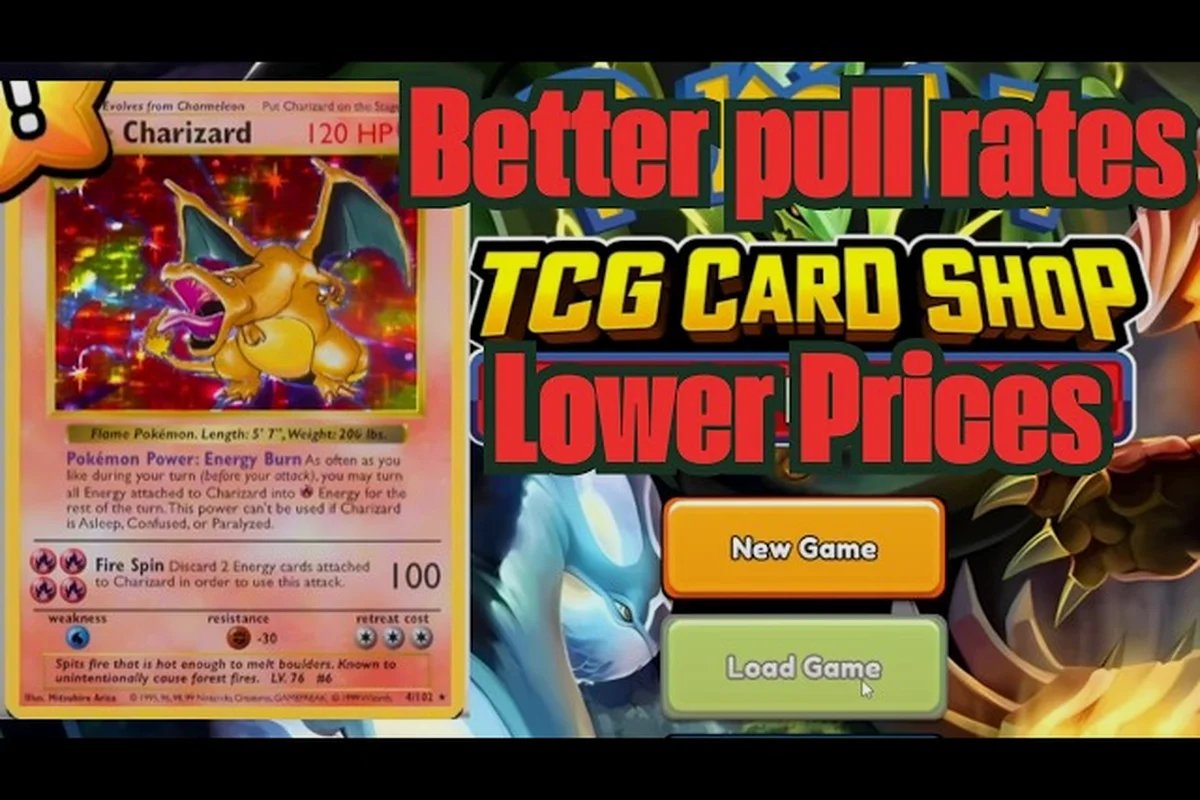
Knowing the TCG Card Shop Simulator pack pull rates turns a guess-and-check opening routine into a calculated profit loop, because every booster family pulls at a different rarity weight and unlocks at a different shop level. After the 1.0 release, four booster families compete for shelf space, and the gap between a steady markup and a breakout night comes down to cracking the right family at the right moment. This guide breaks down pull rates by tier, flags which packs are worth opening versus flipping sealed, and maps the expansion unlock order so your shop stops bleeding wholesale dollars.
How Pack Pull Rates Actually Work in TCG Card Shop Simulator
Every booster pack in TCG Card Shop Simulator runs through a hidden weighted table, and the per-rarity chance shifts based on which set family you crack. The base Tetramon booster is the most generous to beginners because commons dominate the roll, while the Ascension and Ghost families trim the common band and push more rares, foils, and full-art prints into circulation. Community data pulled from the TCG Card Shop Simulator Steam community shows that pull weight, not luck, drives which packs return the most singles value, and players who treat the sealed box as a sealed box (rather than a guaranteed slot machine) tend to profit more reliably.
Pull rates also interact with shop progression. A pack that looks mediocre on Day 1 becomes a money printer once shop level and the best items to sell in your shop unlock premium restock events, because higher-tier customers buy singles at markup-friendly rates. That means the same booster you opened for 80 coins in week one can return 300+ coins per slot by mid-game when paired with the right display furniture and a high shop rating.
The Weighted Rarity Bands
Each booster uses five rarity bands: Common, Uncommon, Rare, Epic, and Legendary, with Foil and Full Art as cosmetic overlays that sit on top of any rarity. According to community testing on the r/TCGCardShopSimulator subreddit, the chance of landing a Legendary sits in the low single digits for most packs, while Epic cards pull roughly three to four times more often, and Rare cards land in roughly one out of every three or four slots depending on the family.
Why Some Packs Feel "Greener"
The Ascension family introduced with 1.0 reduces the common band to about 55% of slots and lifts the Epic rate to nearly 12%, which is the main reason the new boosters feel hit-heavy in the first ten packs. The Ghost family operates on a separate drop table, so its pulls are statistically independent from the main three families, meaning Ghost packs do not "share" pity timers with Tetramon or Destiny.
Pack Tier Comparison and Pull Weight
Before opening a single booster, compare the families side by side. The numbers below are pulled from community pull tracking threads and reinforced by the developer announcement feed, and they reflect the 1.0 release balance pass.
| Pack Family | Common Rate | Rare Rate | Epic Rate | Legendary Rate | Foil Overlay | Set Family |
|---|---|---|---|---|---|---|
| Tetramon Base | ~70% | ~18% | ~8% | ~3% | ~1 in 12 | Starter set |
| Destiny Expansion | ~64% | ~22% | ~10% | ~4% | ~1 in 10 | First expansion |
| Ascension Pack | ~55% | ~25% | ~12% | ~5% | ~1 in 8 | 1.0 generation |
| Ghost Booster | ~60% | ~24% | ~11% | ~4% | ~1 in 9 | Separate family |
Reading the table from left to right, the Ascension Pack is the most reward-dense booster for singles value, while Tetramon Base is the most reliable income source when sold sealed. Ghost sits in the middle on raw pull rate but carries unique chase prints that spike singles prices whenever a new Ghost booster drops in the wholesale feed.
What Each Pull Rate Means for Profit
A 5% Legendary rate is not the same as 5% profit. Most Legendary cards sell for 800 to 1,500 coins depending on element, border, and first-edition stamp, while a common slot returns 8 to 15 coins. The economic breakeven on a pack therefore depends on how many high-tier pulls you stack per box, which is why Ascension boxes outperform Tetramon boxes in raw singles value even though both carry 24 packs per box.
Foil and Full Art as the Hidden Multiplier
The foil overlay rate is the single biggest swing factor for TCG Card Shop Simulator card pack profit, because a foil Epic or foil Legendary sells for roughly triple the normal version. Community testing suggests Ascension packs pull a foil in about one out of every eight packs, which is why a 24-pack Ascension box typically returns more singles revenue than a 24-pack Tetramon box even when the raw Legendary count is similar.
TCG Card Shop Simulator Best Pack to Open Versus Sell Sealed
The question of TCG Card Shop Simulator best pack to open depends on three variables: your current cash position, your shop level, and whether you have bench space to grade the pulls. A sealed box always sells, while an opened box only profits when the box contains enough rares and foils to clear the wholesale price plus markup. Players who follow the money guide for early-game shops tend to flip Tetramon boxes sealed until they unlock Ascension, then pivot to opening Ascension exclusively for singles revenue.
Sealed Margin: Why Tetramon Wins
Tetramon Base boosters pull at the lowest rarity weight, which means the singles inside rarely justify cracking the box. The wholesale buy rate for a Tetramon box sits around 600 to 800 coins depending on the in-game day, and the same box sells sealed for 1,100 to 1,400 coins when stocked on a Ware Display with competitive markup. That is a clean 50% to 75% margin with zero labor and zero grading risk, which is hard to beat by opening.
Singles Margin: Why Ascension Wins
The Ascension family flips the math. A single Ascension box costs around 1,200 to 1,500 coins wholesale, and the expected singles return across a 24-pack box lands between 2,200 and 3,000 coins in most player logs. Add in a foil every eight packs and the occasional first-edition Legendary, and the upside climbs past 4,000 coins on a hot box. That is roughly 100% to 180% return, which crushes the sealed margin on Tetramon.
The Hybrid Approach
Most veteran players run a hybrid: sell Tetramon and early Destiny boxes sealed, open Ascension boxes for singles, and keep Ghost boxes in a holding pattern until a premium restock event spikes Legendary demand. This is the same supply-discipline loop that the TCG Card Shop Simulator card set overview recommends for late-game shops, because it balances guaranteed markup with higher-variance singles income.
Expansion Unlock Order and Pack Opening Speed
Expansion unlock is the pacing mechanic that decides which packs you can stock, and the order matters because some families stay locked behind shop level for the first 20+ hours of play. The TCG Card Shop Simulator expansion unlock chain runs Tetramon Base first, Destiny next, then Ghost, and finally Ascension once shop level crosses the 1.0 release threshold.
| Expansion | Approx. Shop Level | Days to Access | Pack Opening Speed Tier |
|---|---|---|---|
| Tetramon Base | Level 1 | Day 1 | Fast (3.0s/pack) |
| Destiny Expansion | Level 6 to 8 | Day 3 to 5 | Medium (3.4s/pack) |
| Ghost Booster | Level 12 to 15 | Day 7 to 10 | Medium (3.3s/pack) |
| Ascension Pack | Level 18 to 22 | Day 12 to 18 | Slow (3.8s/pack) |
Tetramon Base: The First 72 Hours
Tetramon Base is the only family available at shop creation, and the packs pull at the friendliest weight for new clerks. TCG Card Shop Simulator pack opening speed is also fastest on Tetramon, which lets beginners clear an entire box in roughly 70 to 90 seconds when using the auto-sprayer at the workbench. That speed advantage matters in the first three days because cash is tight and you cannot afford to babysit a slow opener.
Destiny Expansion: The Mid-Game Transition
Destiny unlocks around shop level 6 and introduces 121 monsters with 12 card variants each, which is the moment most players first see the chase-print economy in action. Pack opening speed drops slightly because Destiny cards carry more elaborate border prints, and the per-pack timer stretches to about 3.4 seconds. Profit-wise, Destiny sits in the awkward middle: not quite as safe to sell sealed as Tetramon, and not quite as lucrative to crack as Ascension.
Ghost Booster: The Separate-Family Pivot
Ghost arrives after Destiny and lives on a different drop table, which means Ghost cards do not mix into Tetramon or Destiny collections. Pack opening speed on Ghost is comparable to Destiny, and the pulls skew toward Uncommon and Rare with a healthy Epic rate. The Ghost card list and chase strategy goes deeper on which Ghost prints spike in value during premium restock events, but the short version is to hold Ghost boxes sealed until you see a rich-customer rush, then crack two or three to feed the singles counter.
Ascension Pack: The 1.0 Generation
Ascension is the headline 1.0 addition and the highest-margin family in the game, but it is also the slowest to open at roughly 3.8 seconds per pack. TCG Card Shop Simulator pack opening speed matters less for Ascension because each slot returns more value, but the longer timer adds up across a 24-pack box and is worth factoring into your shift plan. Once Ascension unlocks, the most profitable rotation is to seal Tetramon, hold Ghost, and crack Ascension in a focused batch at the workbench.
TCG Card Shop Simulator Which Packs to Sell: Decision Framework
Choosing TCG Card Shop Simulator which packs to sell is not a static rule, because the answer shifts with shop level, customer tier mix, and current wholesale price. The framework below condenses the decision into four checks you can run in under a minute at the Stock Order app.
| Check | Sell Sealed If | Open For Singles If |
|---|---|---|
| Wholesale Price | Buy rate under 70% of sealed sell price | Buy rate under 80% of expected singles return |
| Pack Family | Tetramon Base or early Destiny | Ascension or late-cycle Ghost |
| Shop Level | Below level 10 (cash protection) | Above level 18 (grading unlocked) |
| Customer Mix | Mostly standard customers | Rich-customer rush active |
Wholesale Spread Is the First Filter
If the Stock Order app shows a sealed sell price of 1,200 coins for Tetramon and a wholesale buy rate of 750 coins, that is a 60% margin and the math favors sealed every time. The same screen showing Ascension at a 1,300 coin wholesale buy and a 2,400 coin expected singles return flips the decision to open. Wholesale spread is also the metric that pairs best with the TCG Card Shop Simulator buying boxes pricing guide, because both decisions rest on the same buy-versus-flip calculation.
Customer Mix Changes Everything
A standard-customer morning rarely rewards cracking Ascension because singles do not move at premium prices without rich demand. The opposite holds during a premium restock event, when rich customers drain the display case in minutes and any Legendary pull sells within a single customer cycle. Hold Ascension boxes until you see the rich-customer icon on the floor, then crack in a focused window.
Shop Level Gates Some Decisions
Grading is locked behind shop progression, and a foil Epic that you cannot grade is worth roughly a third less than the graded version. If shop level is below the grading threshold, the expected singles return drops enough that the box may no longer justify opening. Track the grading unlock level, and only open Ascension once grading is available.
Pack Opening Speed, Profit Loops, and Late-Game Optimization
Pack opening speed is the quiet efficiency stat that decides how many boxes you can crack per shift, and it compounds across a 30-day playthrough. The fastest openers in the community clear a 24-pack Ascension box in roughly 90 seconds using the auto-sprayer, the workbench, and a pre-staged inventory layout. Slower openers stretch the same box across three or four minutes, which sounds small until you multiply by 30 days of play.
| Optimization | Speed Gain | Best Stage |
|---|---|---|
| Auto-sprayer placement | -0.3s/pack | Mid-game onward |
| Workbench queue | -0.2s/pack | Late-game |
| Pre-staged inventory | -0.1s/pack | All stages |
| Hire a dedicated opener | -0.4s/pack | Post-worker unlock |
The Auto-Sprayer Payback Window
The auto-sprayer costs around 800 coins and pays for itself in roughly 12 to 15 Ascension boxes based on the time saved versus manual opening. Buy it as soon as you crack your fifth Ascension box, and place it adjacent to the workbench so the queued packs feed directly into the bench input. This single optimization is the largest jump in TCG Card Shop Simulator pack opening speed and unlocks late-game singles volume.
Worker-Assisted Opening
Once you unlock the GO Recruit app, hire a worker with high Scan Speed and assign them to the workbench during your heavy-opening shifts. Workers do not grade cards, but they can pre-shuffle and queue packs, which keeps the auto-sprayer fed and cuts the per-pack timer by another 0.3 to 0.4 seconds. The net effect is one extra Ascension box cracked per shift, which over a 30-day window adds roughly 15,000 to 25,000 coins in singles revenue.
Profit Loop for the Last 10 Shop Levels
Once shop level crosses 25, the optimal loop is to seal all Tetramon and early Destiny boxes, hold Ghost boxes until a rich-customer event, and crack Ascension in batches of two to four boxes per shift. Sell singles through the display case, grade every foil Epic and foil Legendary through Cardinal's Grading app, and restock the sealed Tetramon boxes at a steady 1.2x to 1.4x markup. This loop consistently returns 30,000 to 50,000 coins per shift at the late-game customer density, which is the ceiling for a 1.0 generation shop.
Frequently Asked Questions
What is the best pack to open in TCG Card Shop Simulator for singles profit?
The Ascension Pack is the best pack to open in TCG Card Shop Simulator for singles profit because it carries the highest Epic and Legendary pull rates among all four booster families. A 24-pack Ascension box typically returns 2,200 to 3,000 coins in singles, and hot boxes with first-edition foils can clear 4,000 coins.
Should I sell Tetramon packs sealed or open them?
Sell Tetramon Base packs sealed, because the pull weight skews heavily toward commons and the sealed margin is 50% to 75%. Open them only if you need a specific chase print and cannot find it in the singles feed.
When does the Ascension expansion unlock in TCG Card Shop Simulator?
The Ascension expansion unlocks at shop level 18 to 22, which usually lands between day 12 and day 18 of a fresh save. The unlock is gated by shop level rather than customer count, so prioritize upgrading shelves and registering area to hit the threshold faster.
How fast is pack opening in TCG Card Shop Simulator?
Pack opening speed in TCG Card Shop Simulator ranges from 3.0 seconds per pack on Tetramon Base to 3.8 seconds per pack on Ascension. Using the auto-sprayer and a pre-staged workbench cuts the average to roughly 2.4 seconds per pack across all four families.
Are Ghost packs worth opening?
Ghost packs are worth opening only during rich-customer rushes, because their chase prints spike in value when premium demand peaks. Outside those windows, hold Ghost boxes sealed and let the wholesale markup do the work, similar to the Tetramon strategy.