
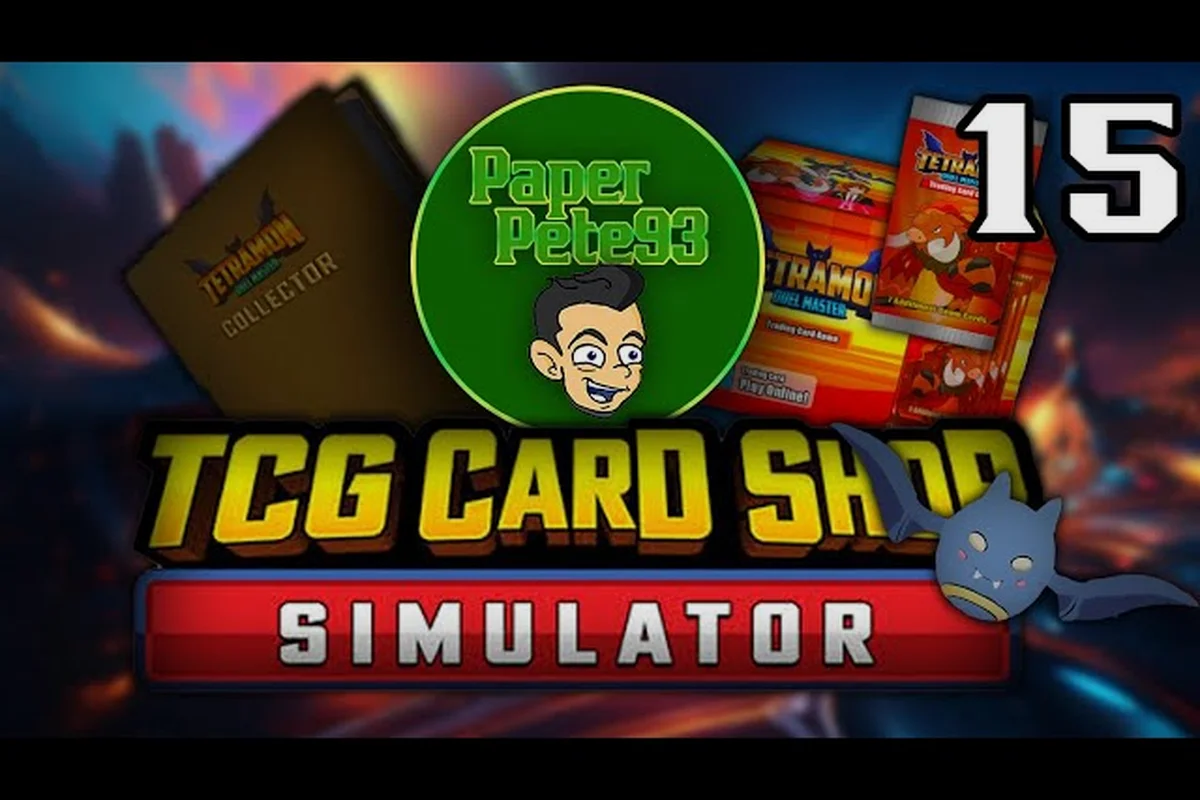
What the TCG Card Shop Simulator Rare Pack Tier Actually Is
The TCG Card Shop Simulator rare pack is the workhorse booster of the Destiny expansion — the middle rung of a four-step ladder (Basic → Rare → Epic → Legendary) and the format most new shop owners should stock first. Every pack tier has a matching box product, and boxes are the format most worth buying in bulk at wholesale, according to the official official YouTube video library. A rare pack sits above a basic pack in hit quality and below the Epic and Legendary drops, which makes it the most balanced unit to unbox, display, and resell for steady margin.
Destiny splits into Basic, Rare, Epic and Legendary Destiny packs plus a Destiny Battle Deck for the card game side, as noted on the same developer channel. That structure mirrors the way Tetramon booster packs are organized in the base catalogue, so once you learn one family the next one transfers cleanly. The rare pack sits in a sweet spot where pull rates are good enough to feel rewarding, prices are high enough to make a profit, and the box is small enough that you can cycle through a case before the meta shifts.
Pack Tier Snapshot
| Tier | Where It Drops | Typical Use | Relative Restock Cost |
|---|---|---|---|
| Basic | Tetramon base, Destiny core | Starter sales, bulk singles | Lowest |
| Rare | Destiny, Tetramon mid-cycle | Daily best-seller | Low-mid |
| Epic | Destiny, Ascension 1.0 | Chase singles, premium shelf | Mid-high |
| Legendary | Destiny, Ascension chase tier | High-end singles, display flex | Highest |
| Battle Deck | Destiny, Tetramon precons | Ready-to-play product | Mid |
The TCG Card Shop Simulator epic pack and TCG Card Shop Simulator legendary pack are not replacements for the rare tier — they are a step up the same ladder, with longer odds and higher per-pack cost. Most shop owners stock all four rather than picking one because each tier satisfies a different customer. The rare pack is what the average walk-in customer actually buys, and that volume is what funds the rest of the inventory. Shop owners who want a closer look at the tier breakdown and how each pack is typically priced can compare the options in our Wholesale Packs overview, which shows why the rare pack ends up being the volume driver behind the rest of the inventory.
How the Rare Pack Compares to Epic and Legendary
The differences between the rare, epic, and legendary Destiny packs come down to three numbers: the price you pay at wholesale, the hit rate inside each pack, and the resale value of the chase card. Stacked against each other, the rare pack is the most forgiving of the three, while legendary is the highest-variance lottery ticket that only pays off if you can move a chase single for several hundred in-game dollars when the market spikes.
Tier-by-Tier Comparison
| Attribute | Rare Pack | Epic Pack | Legendary Pack |
|---|---|---|---|
| Wholesale cost per box | Lowest of the three tiers | ~1.6–2× rare | ~2.5–3× rare |
| Average hit quality | Mid-tier holo, occasional full art | Higher holo rate, more full art | Top chase prints, secret rares |
| Time to flip a single | Fast (1–2 in-game days) | Medium (2–4 days) | Slow (depends on meta) |
| Best for | Steady daily margin | Set completion push | Speculative hoarding |
| Risk of sitting on dead stock | Low | Medium | High |
Reading the table, the TCG Card Shop Simulator rare pack is the lower-risk leg of the triangle. You pay less, you cycle stock faster, and the customers who walk in for a quick pack pull almost always reach for the rare first. Epic sits in the middle and is the format you push during a set launch window when the meta is hot. Legendary is the format you only lean on when you already have a buyer lined up or you are deliberately banking on a future price spike.
When to Stock Epic Over Rare
There are two situations where an Epic or Legendary pack is the better buy than a rare pack. The first is during a fresh set launch when most chase singles peak in value before slowly settling. The second is when your customer base is rich-customer heavy and your shop rating is high enough that they will pay premium prices without pushing back. Outside of those windows, the rare pack remains the safest bet for daily revenue. A reasonable rule of thumb is to keep roughly half of your booster wall in rare packs, a quarter in epic, and the rest split between basic (for the casual crowd) and legendary (for the collector niche).
Battle Decks vs Booster Packs: Where the Real Margin Lives
Battle decks are a different product than booster packs, and they earn money through a different mechanic. A TCG Card Shop Simulator battle deck is a pre-constructed, ready-to-play product that customers buy when they want to skip the deckbuilding step and jump straight into a tournament. The most prominent example in the current catalogue is the TCG Card Shop Simulator destiny battle deck, which ships a fixed 60-card list and is often the first preconstructed product a new player picks up.
The margin profile is different from booster packs. Booster packs make money on hit variance — every box contains a chance at a chase, and the player is paying for that lottery. Battle decks make money on volume and convenience — every box is the same, the contents are predictable, and the buyer is paying a premium to skip the grind. That structural difference is why most profitable shops carry both but push the products in different directions.
Booster Pack vs Battle Deck
| Product Type | What the Buyer Wants | How You Profit | Best Placement |
|---|---|---|---|
| Booster pack | Lottery thrill, chase pull | Single-card resale, graded flips | Ware display, front shelf |
| Battle deck | Ready-to-play tournament entry | Steady markup, accessories cross-sell | Card display, near play tables |
| Card boxes | Bulk buying, set completion | Wholesale discount margin | Floor shelf, warehouse |
| Singles | Specific card for a deck | High markup on chase prints | Personal shelf, display case |
How Battle Decks Fit Into the Daily Loop
Battle decks pair naturally with the Play Table economy. A customer who buys a battle deck often plays a match right after, which means the table fee is part of the same transaction. That is why most experienced shop owners place the TCG Card Shop Simulator battle decks near the play tables rather than in the warehouse. The closer the deck is to the table, the more likely the customer is to play, and every match is an extra revenue line on top of the deck sale.
The TCG Card Shop Simulator destiny battle deck in particular benefits from a tight placement loop because the deck itself is a decent tournament entry on its own. Customers who pick one up often run a Standard event the same in-game day, which is when you want your play tables clean, your event rotation scheduled, and your event fee priced to cover the cost without scaring off the field. Bundling a deck sale with a play table hour is one of the cleanest profit loops in the mid-game economy.
Booster Packs and Card Boxes at Wholesale
Wholesale is where the rare pack starts to outperform its reputation. The TCG Card Shop Simulator on Steam store page confirms the collection spans 4,436 cards across four set families, which means a single shop needs a deep and varied restock pipeline to keep every customer satisfied. Buying individual packs is the most expensive way to fill that pipeline, and TCG Card Shop Simulator card boxes are the wholesale unit that brings the per-pack cost down to a level where margin is real.
A standard box holds multiple packs, and a case holds multiple boxes, with each step up the bulk ladder cutting the per-pack cost further. The exact numbers shift by tier, but the principle is consistent: the more boxes you commit to, the lower your cost basis on every pack you put on the shelf or crack open for singles. For shop owners who want to scale, buying at the box level is non-negotiable — you cannot out-sell a competitor who is paying 30% less per pack just by working longer hours.
Box Economics at a Glance
| Buying Format | Per-Pack Cost | Best For | Risk Level |
|---|---|---|---|
| Single pack | Highest | Casual restock, customer impulse buys | Low |
| Box (multiple packs) | Medium | Weekly restock cycle | Medium |
| Case (multiple boxes) | Lowest | Set launch, long-term inventory | High upfront |
How to Use the Stock Order App Without Overbuying
The Stock Order app is the in-game tool that lets you set up automated wholesale purchases, but the default settings tend to over-order when you first unlock them. A practical approach is to set your restock threshold to roughly the level at which your shelf hits half-empty, cap the order size to a single box per restock, and only raise the cap once you have watched the cycle for at least two in-game weeks. The temptation to fill the warehouse is strong, especially when a set launches, but dead stock is the most common reason a profitable shop goes cash-negative in the first 30 days.
For TCG Card Shop Simulator booster packs, the same logic applies but with a tighter cycle. Boosters are impulse purchases, and the customer expects the wall to look full. Running out of rare packs in the middle of a busy hour will cost you more in lost walk-ins than the few extra dollars you save by under-ordering, so the right threshold for boosters is closer to two-thirds empty than half-empty.
Rare Pack Strategy: What to Stock, Open, and Flip
Strategy for the TCG Card Shop Simulator rare pack boils down to three decisions: how many boxes to keep sealed for resale, how many to open for singles, and when to drop the price on a slow-moving box. Most shop owners split the order — keep a third of the stock sealed, open a third for singles, and leave a third in reserve for the next meta shift. That mix changes with the health of your local market, but the principle of holding some sealed inventory through a price dip is the same one that protects a real-world card store.
Sample Allocation for a 12-Box Restock
| Allocation | Boxes | Purpose | Expected Return Window |
|---|---|---|---|
| Sealed resale | 4 | Hold for market spike | 1–2 in-game weeks |
| Open for singles | 5 | Build display inventory | 2–5 in-game days |
| Floor shelf | 3 | Daily walk-in traffic | Same day |
Reading Market Signals for the Rare Pack
The rare pack is sensitive to three market signals more than any other tier. First, set completion pushes — when players are chasing the last few cards in the set, rare pack demand spikes because each pull could be the one that finishes the collection. Second, event season — running a Standard event or a Pauper event drives rare pack sales because players want to test new deck ideas. Third, new player waves — a fresh batch of customers always buys more rare packs than any other tier because they are still learning the rarity ladder and want a mix of hits and bulk.
Tracking those signals through the TCG Price app and the Reviews app gives you roughly a 24–48 in-game hour lead time on demand changes. That window is short, but it is enough to restock the shelf, raise the per-pack price by a small margin, and clear inventory before the wave passes. The shops that consistently beat the market on rare packs are not the ones with the deepest warehouses — they are the ones paying attention to the app data and reacting within the same day.
Frequently Asked Questions
What is the difference between a TCG Card Shop Simulator rare pack and an epic pack?
The TCG Card Shop Simulator rare pack is the mid-tier booster of the Destiny expansion with lower per-pack cost and faster cycle time, while the TCG Card Shop Simulator epic pack is a step above it with a higher hit rate, more full art pulls, and a roughly 1.6–2× wholesale cost. Rare is the daily best-seller; epic is the format you push during a set launch or a meta shift.
Are battle decks profitable in TCG Card Shop Simulator?
Yes. TCG Card Shop Simulator battle decks earn steady markup from volume and convenience sales, and they cross-sell well with play table fees. The TCG Card Shop Simulator destiny battle deck in particular pairs naturally with Standard and Pauper events because the preconstructed list is a legal tournament entry on its own.
Is it better to buy booster packs or card boxes at wholesale?
For most shop owners, TCG Card Shop Simulator card boxes are the right unit because they cut the per-pack cost meaningfully. A reasonable split is to keep a small single-pack buffer on the front shelf for impulse buyers and run the main restock cycle at the box level so the cost basis supports a real margin on every sale.
How does the rare pack fit into a set completion strategy?
The rare pack is the most efficient booster for filling out the lower-rarity slots in a set because each pull has a reasonable chance of contributing a needed card. Higher chase prints usually come from the epic and legendary tiers, so combining rare pack bulk with selective epic and legendary purchases covers the full completion path without overpaying for singles.
What is the safest way to scale inventory on booster packs without running out of cash?
Set the Stock Order app to restock at roughly two-thirds empty for TCG Card Shop Simulator booster packs, cap the order size to a single box per restock, and only raise the cap after watching the cycle for at least two in-game weeks. Under-ordering briefly is cheaper than over-ordering and getting stuck with dead stock during a meta shift.