
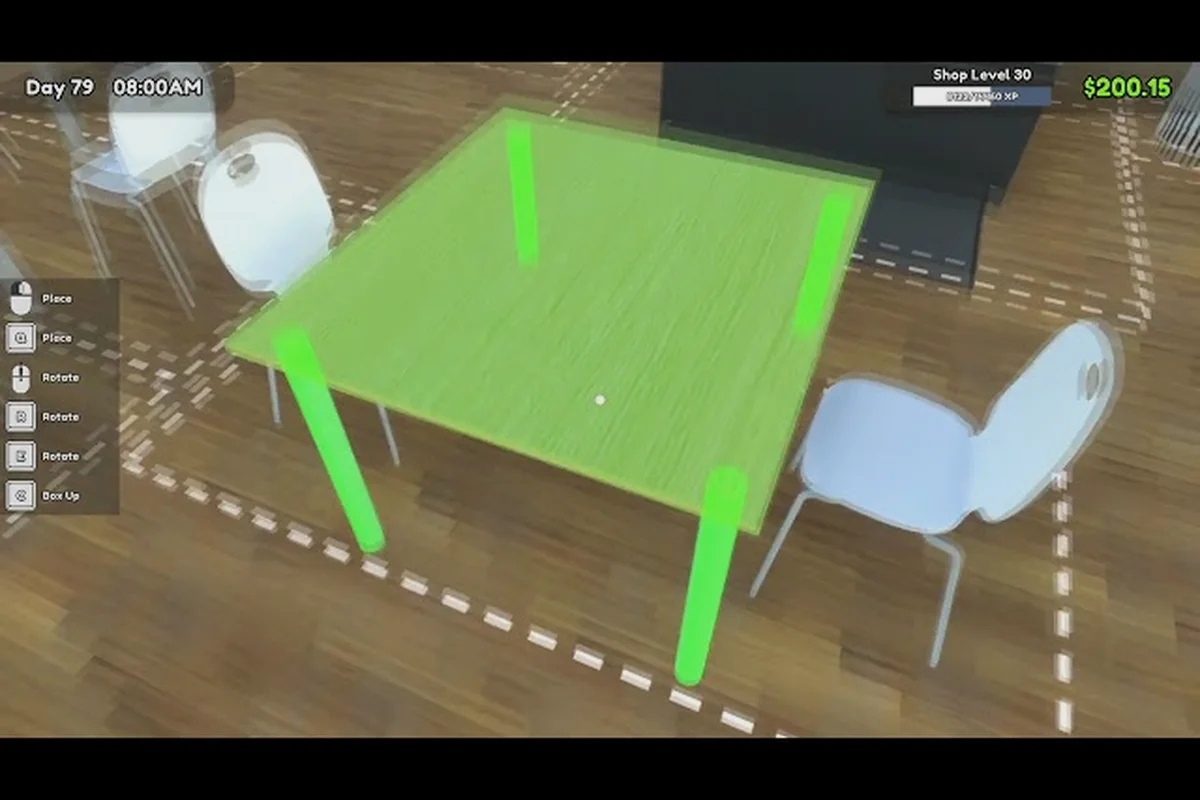
The right shop furniture is what turns a bare room with a register into a store that actually moves cardboard. Every shelf, counter, and display in the TCG Card Shop Simulator furniture list serves a different sales job, and the 1.0 full release gives new players more ways to shape a floor than the Early Access build ever did. Before unlocking a single worker or designing a play area, locking in the correct layout is the fastest path to steady income.
Why Furniture Matters in TCG Card Shop Simulator
Furniture in this sim is not pure decoration, even though the chair, counter, and flooring choices look cosmetic at first glance. According to the official Steam announcement feed, shop furniture feeds the review score that multiplies play table income, which means each upgrade compounds on the next sale. A new clerk who skips ware displays or skips card displays in favor of pure inventory is leaving review pressure on the table, because the same stock on a bare counter will not impress a Tetramon player the way a personal shelf will.
The TCG Card Shop Simulator furniture list splits into four working families, and the floor plan usually has room for one of each. Ware displays handle boxed product and accessories, card displays handle singles and packs, personal shelves handle compact high-value presentation, and warehouse shelves handle bulk backstock kept out of the sales floor. Knowing which piece belongs to which family is the first real strategy decision after placing the register.
| Family | Primary Job | Where It Lives | Review Score Weight |
|---|---|---|---|
| Ware Displays | Boxed product, sleeves, deck boxes | Sales floor, near the entrance | High |
| Card Displays | Singles, booster packs, tins | Sales floor, near play tables | High |
| Personal Shelves | High-value singles, graded pulls | Sales floor or counter zone | Medium-High |
| Warehouse Shelves | Bulk backstock, restock overflow | Back room, storage area | None (back-of-house) |
Furniture also matters because of customer flow. A shop that can hold up to 28 customers at once (as listed on the TCG Card Shop Simulator on Steam store page) needs clear lanes for browsers, buyers, and play table players. A crowded floor with two huge ware displays in the doorway will cause customers to back up, and a backed-up customer leaves without buying the expensive card they were about to pull off a personal shelf.
Ware Displays: Boxed Product Powerhouses
Ware displays are the big, boxy furniture pieces that hold sealed product, deck boxes, sleeves, and playmats. In any TCG Card Shop Simulator furniture list written by experienced players, ware displays always sit at the top of the priority queue, because they generate both impulse buys and review points at the same time. A shop with empty floor space and no ware display looks empty, and empty-looking shops score low on the review meter even when the cash register is ringing.
Best Ware Display Picks
The community-tested ware display tier breaks into three practical tiers based on stock capacity and visual impact.
| Tier | Ware Display Type | Capacity | Best Use |
|---|---|---|---|
| S | Wide Glass Cabinet | 12 slots | Anchor piece near the entrance |
| A | Standard Wall Shelf | 8 slots | Long wall runs, two-piece symmetry |
| B | Corner Cube Display | 4 slots | Fill dead corners, no wasted space |
A new shop should start with one Standard Wall Shelf and one Corner Cube Display, then save for a Wide Glass Cabinet once the daily revenue crosses a few hundred in-game dollars. The Wide Glass Cabinet is the centerpiece of most successful Early Access shops that survived into 1.0, because its 12-slot capacity lets the shop showcase an entire booster box lineup at once.
Card Displays: Singles, Packs, and Tins
Card displays are the small, low-profile pieces that hold individual booster packs, single cards in sleeves, and sealed tins. They sit at counter height and are the only furniture type a Tetramon player will touch while waiting for a play table to open up. Without at least two card displays, the shop cannot present singles at eye level, and singles are the highest-margin product in the entire game.
Card Display Slot Math
A common mistake new clerks make is treating card displays like miniature ware displays. The slot logic is completely different, because a card display slot is meant to show one item face-out, while a ware display slot shows a stack or box. The TCG Card Shop Simulator furniture list treats these as separate furniture types for a reason: they have different restock cadences, different review weights, and different customer behavior attached to them.
| Display Type | Slots | Slot Style | Restock Cadence |
|---|---|---|---|
| Counter Tray | 6 | Flat, face-up | Every shift |
| Wall Card Rack | 10 | Vertical, face-out | Twice per day |
| Spinner Rack | 16 | Multi-tier rotating | Once per day |
Counter Trays are the best starter option because they restock fastest and sit right next to the register, which means impulse buyers grab a pack while the cashier is ringing up their previous purchase. Wall Card Racks earn their space once the shop has more than three play tables running at once, and Spinner Racks are endgame pieces for shops that have maxed out both floor space and reviewer goodwill.
Personal Shelves: The High-Margin Showcase
Personal shelves are the compact, often glass-fronted pieces that hold graded pulls, promo cards, and other high-value single-card inventory. They are the only furniture in the TCG Card Shop Simulator furniture list that triggers the premium customer dialogue, which is the line of speech that says things like "I have been looking for this exact card everywhere." A floor without at least one personal shelf will never attract that customer archetype, which caps the shop's ceiling on per-ticket revenue.
Players who treat personal shelves like an afterthought usually do so because the early-game pricing of high-value singles is intimidating. The math works out, though: a personal shelf slot sells an average of one card per in-game day at premium markup, and the review-score bump per personal shelf is heavier per square foot than any other furniture type. For full context on how to balance graded pulls against the rest of inventory, the TCG Card Shop Simulator best shelves breakdown covers slot-for-slot return on investment.
| Personal Shelf Type | Capacity | Markup Tier | Customer Type Drawn |
|---|---|---|---|
| Glass Mini Shelf | 4 | Standard | Returning regulars |
| Curio Cabinet | 6 | Premium | Promo hunters |
| Locked Display Case | 8 | Apex | Apex-tier collectors |
A shop that reaches the Locked Display Case tier has usually hit the 1.0 endgame, because that piece costs as much as a full warehouse shelf wall. Until then, a single Curio Cabinet near the play tables is the highest-value furniture investment a mid-game shop can make.
Warehouse Shelves: The Back-of-House Engine
Warehouse shelves never appear on the sales floor, and that is the point. Their job is to hold bulk backstock, restock overflow, and the extra booster boxes that the ware displays cannot fit during a hot-streak weekend. Without warehouse shelves, the rest of the TCG Card Shop Simulator furniture list has nothing to restock from, which means the front-of-house displays empty out by mid-day and stay empty until the next morning delivery.
The TCG Card Shop Simulator warehouse shelves category is split by stack height, which determines how many booster boxes the shelf can physically hold. Stack height matters more than slot count, because Tetramon booster boxes are taller than deck boxes and tins.
| Warehouse Shelf | Stack Height | Total Boxes | Best Location |
|---|---|---|---|
| Low Pallet Rack | 3 boxes tall | 36 | Closest to the back door |
| Standard Rack | 5 boxes tall | 60 | Main back-room wall |
| Tall Mezzanine Rack | 8 boxes tall | 96 | Endgame back room only |
Most new clerks buy one Standard Rack and call it done, which is fine for the first month of play. The mistake is not buying a second one before the shop starts running hot product, because the moment a hot product appears in the catalog, the Standard Rack fills up and the front-of-house displays run dry within a single in-game shift. Plan for two Standard Racks or one Tall Mezzanine Rack before the first hot-product week.
Putting the Floor Together
The TCG Card Shop Simulator furniture list only matters when it gets laid out in a way customers can actually navigate. A shop that crams every display against the wall has no browsing lane, and a shop that floats every display in the middle of the room has no anchor for the eye. The community-tested 1.0 layout uses a simple three-zone split: the entrance zone holds ware displays, the counter zone holds card displays, and the back-of-house holds warehouse shelves, with personal shelves floating between zones as accent pieces.
| Zone | Furniture Mix | Customer Behavior Driven |
|---|---|---|
| Entrance | 1 Wide Glass Cabinet, 1 Standard Wall Shelf | Browsing, impulse buys |
| Counter | 2 Counter Trays, 1 Curio Cabinet | Singles purchases, premium dialogue |
| Back Room | 2 Standard Racks | Restock overflow, hot-product storage |
For the 1.0 launch floor, two ware displays, two card displays, one personal shelf, and two warehouse shelves is the minimum working setup. Anything less and the shop will struggle to hit the review-score threshold that unlocks the higher-tier play table income multipliers. Anything more and the shop starts paying for furniture it cannot restock, which is the most common way Early Access shops went broke before the 1.0 full release rebalanced the early-game economy.
Frequently Asked Questions
What is the first piece of furniture a new shop should buy in TCG Card Shop Simulator?
A Standard Wall Shelf is the smartest first purchase because it costs less than a Wide Glass Cabinet but still holds eight slots of boxed product. Pair it with a Corner Cube Display on day one to fill the entrance zone, then save for the Wide Glass Cabinet once daily revenue stabilizes.
How many card displays does a shop need before the review score stops climbing?
Most shops max out the card-display review bonus at three units. A Counter Tray, a Wall Card Rack, and a Spinner Rack together cover counter impulse buys, mid-shop browsing, and endgame singles presentation, which is the configuration that pulls the highest review score per square foot.
Are warehouse shelves worth buying early, or should they wait?
One Standard Rack should be in the back room from day one, because without it, the front-of-house displays cannot be restocked mid-day. The second Standard Rack and any Tall Mezzanine Rack can wait until the shop has hit its first hot-product week and the back room starts overflowing.
Do personal shelves actually increase sales, or are they cosmetic?
Personal shelves are the only furniture that triggers premium customer dialogue, which is the line that says a customer has been searching for a specific card. That dialogue reliably converts into apex-tier sales, so a single Curio Cabinet near the play tables pays for itself within a few in-game days at premium markup.
Where can players see the full TCG Card Shop Simulator furniture list with stats?
The official store page on Steam lists the 1.0 release date as September 15, 2026, while player-curated databases and the community discussion hub track every furniture stat as patches land. Checking both sources side by side is the fastest way to confirm any single piece's slot count and review-weight numbers before spending in-game cash.