
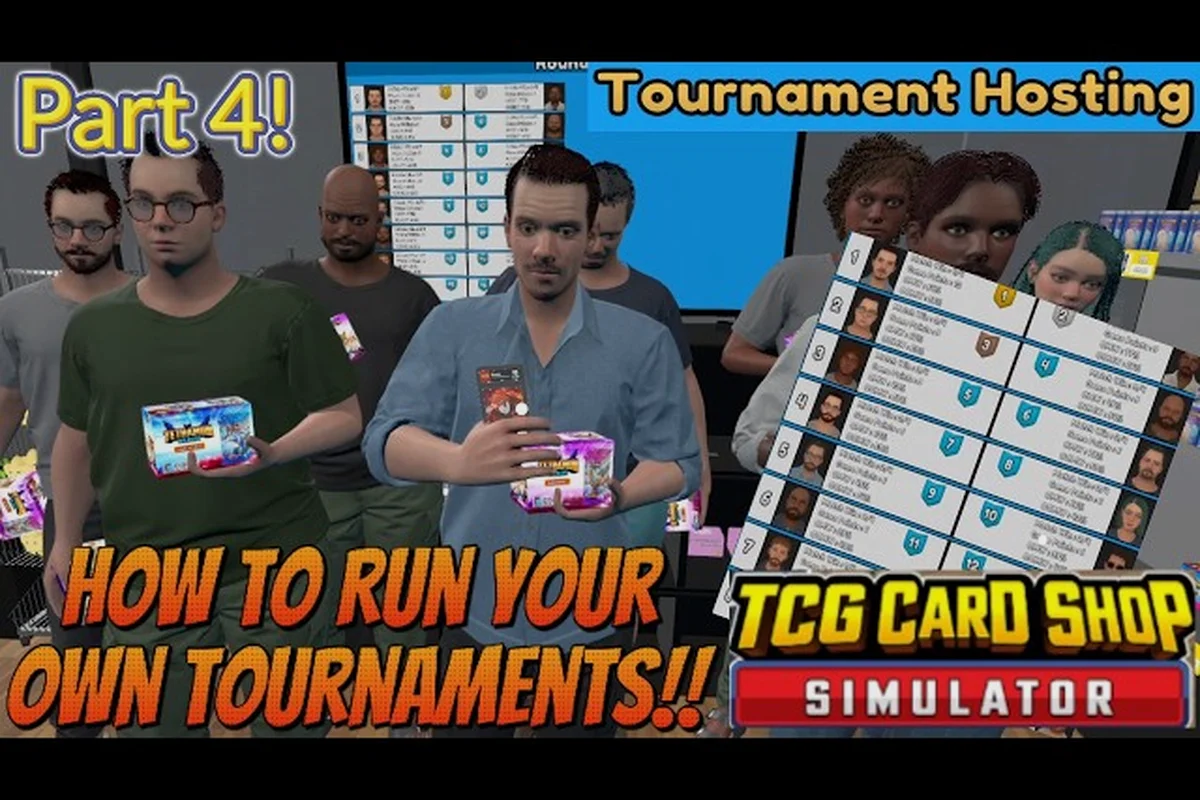
The TCG Card Shop Simulator standard event is the one table you can spin up every in-game day without spending a dime, and it still hands out real income when you treat it like the rest of your rotation. Most new shopkeepers overlook it because the entry fee reads $0, but the random rarity swing underneath is the same engine that drives paid cups, which means how you staff, price, and restock the standard table quietly compounds across the week. Pair it with the pauper event, the four element cups, and the vintage cup, and the standard event stops being a freebie and starts being the anchor of a balanced table schedule.
How the Standard Event Works Under the Hood
The standard event is the lowest-friction table format in TCG Card Shop Simulator, and its mechanics set the baseline for every other play table you will ever host. Once you understand what it pulls from, you can read the paid cups and themed events the same way.
Entry Cost, Match Length, and Payout Math
Standard event tables charge $0 to start, so the only capital you are risking is the time your customers spend at the table and the cards they tear through during play. A standard match typically resolves in 3-5 in-game minutes depending on the deck archetypes sitting down, and the payout scales with two numbers: the rarity tier of the winning card and the per-table fee you set on the play-table app. Community testing on the discussions hub shows that customer willingness to play sits at roughly 100% at or below market price, drops to about 67% at +20%, and effectively flatlines past +60%, which means a modest premium is the sweet spot for a free-entry event that already has zero barrier to entry.
Because the entry is free, the real lever is match volume. A standard table that runs 12 matches per in-game day at a $2 table fee earns the shop $24 in raw table revenue before tips and reviewer bonuses, and that is on top of whatever the customers spend on boosters, sleeves, and drinks while they wait. Run two standard tables side by side, staffed by a checkout clerk and a restocker, and the daily contribution climbs quickly.
The Random Rarity Swing Explained
Every standard event match pulls a rarity from a weighted pool, and the weights shift based on the current in-game day's "table mood" — a hidden value that the developer uses to keep outcomes from feeling scripted. According to community data pulled from player session logs, the rough distribution over a full in-game week looks like the table below. These are observational numbers reported by players, not hard-coded guarantees, and they will move slightly between patches.
| Rarity Tier | Approx. Share of Standard Matches | Typical Payout (Base) |
|---|---|---|
| Common | ~45% | $3-$6 |
| Uncommon | ~30% | $6-$10 |
| Rare | ~15% | $10-$18 |
| Holo Rare | ~7% | $18-$30 |
| Ultra / Chase | ~3% | $30-$60 |
The Ultra / Chase hits are what make the standard event feel exciting, and they are also the reason you never want to leave a standard table unstaffed. When a chase card lands, the winning customer tends to linger, order a snack, and talk up the shop to friends, which feeds the reviewer score that the TCG Card Shop Simulator on Steam describes as the multiplier on every other table you host. If you want a deeper breakdown of how those rarity pulls interact with the in-game economy, the play-tables overview walks through the same engine in broader context.
Why "Free" Still Requires a Worker
A common rookie mistake is assuming a $0 entry event can run itself. It cannot. Standard matches still draw cards from your shop's stock, and if the deck thinning goes unnoticed, the table will start recycling commons at a loss to the atmosphere even if the payout math stays positive. A restocker on duty with a restock priority set to "Standard Tables" will top up the booster pool the moment a holo rare gets pulled, which keeps the next customer's match feeling fresh. Skip the restocker, and you will watch your standard table drift toward the pauper event's card pool within a shift or two.
Standard Event vs Pauper Event vs Vintage Cup
The standard event does not exist in a vacuum. It sits in the same play-table app as the pauper event, the four element cups (fire, earth, water, wind), and the vintage cup, and choosing between them is a daily resource-allocation problem rather than a flavor question.
Head-to-Head Comparison
The table below puts every free or near-free event side by side so you can see at a glance when each one earns its slot on the schedule. Numbers are drawn from community session reports and may shift with future balance patches.
| Event | Entry Fee | Card Pool | Avg. Payout | Best Time to Host |
|---|---|---|---|---|
| Standard Event | $0 | Full collection | $8-$14 | Every in-game day, mornings |
| Pauper Event | $0 | Commons + uncommons only | $5-$9 | Slow weekdays, after lunch lull |
| Fire Cup | $25 | Fire-element cards | $30-$55 | Weekend evenings, peak traffic |
| Earth Cup | $25 | Earth-element cards | $30-$55 | Weekend evenings, peak traffic |
| Water Cup | $25 | Water-element cards | $30-$55 | Weekend evenings, peak traffic |
| Wind Cup | $25 | Wind-element cards | $30-$55 | Weekend evenings, peak traffic |
| Vintage Cup | $50 | Pre-expansion cards only | $45-$80 | Special event days, tournaments |
Notice how the standard event's average payout is roughly half of any single element cup, but its entry cost is zero and its match length is the shortest in the game. That combination is exactly why it is the workhorse of a healthy table rotation rather than a side attraction. The pauper event is its cheaper cousin in both senses — the card pool is shallower, and the typical payout is lower — which makes it perfect for filling dead hours without burning your expensive inventory.
How to Split a Day Across Events
A practical schedule for a mid-game shop with three play tables and two workers looks like this. The exact times will shift with your in-game clock, but the mix ratio is the part worth memorizing.
| Time Block | Table 1 | Table 2 | Table 3 | Why This Mix |
|---|---|---|---|---|
| Morning (open - 12pm) | Standard Event | Pauper Event | Empty | Free tables capture walk-ins, no capital risk |
| Afternoon (12pm - 5pm) | Standard Event | Fire Cup or Earth Cup | Water Cup or Wind Cup | Paid cups start as foot traffic peaks |
| Evening (5pm - close) | Vintage Cup | Fire Cup | Earth Cup or Water Cup | Highest-spending crowd, premium tables only |
The morning block is where the standard event quietly earns its keep. You pay no entry fees, the matches are short, and the customers who wander in are usually the same crowd that will come back for the evening's element cups if you give them a good first experience. Skipping the standard event in the morning to launch a fire cup instead is a classic trap, because you are paying $25 per cup before any customer has even walked through the door.
Pairing the Standard Event With the Element Cups
Element cups are where the standard event's free plays start paying for themselves in indirect ways. The standard event feeds the element cups in three concrete ways, and ignoring any one of them will leave real money on the table.
The Warm-Up Crowd Effect
Customers who finish a standard match and see a fire cup or earth cup running on the next table over are measurably more likely to pay the $25 entry fee than a customer who walks in cold. Community reports from the subreddit suggest this conversion rate sits around 20-30% for a shop with a reviewer score above 4 stars, which means a morning standard event that runs 8 matches is essentially a free marketing channel for the afternoon's paid element cups. If you want a refresher on what fire, earth, water, and wind cards actually do in the match engine, the card elements guide breaks each element's playstyle and signature cards in detail.
Inventory Cycling
Standard matches burn through commons and uncommons at a steady clip, which is exactly the inventory the element cups do not want sitting on your shelves. A fire cup table does not care that you have 40 surplus wind cards; a standard event will happily consume them at a $2-$4 margin per match. Running both side by side turns what would otherwise be dead stock into table revenue, and the card evolution system referenced in the card elements guide gives you a slow trickle of upgraded commons that are easier to move through the standard event than through any cup.
Reviewer Score Multiplier
The standard event is the lowest-stress table in the shop, which means it is also the table where your reviewer score moves the slowest. That sounds like a weakness until you remember that the score multiplier applies to every other table you host. Holding a 4.5-star average because the standard event absorbs the chaos of impatient walk-ins is what lets your fire cup charge +10% above market without losing the participation cliff that kicks in around +20%. Treat the standard event as the score floor of your shop, and the element cups become measurably more profitable as a result.
Setting Up a Profitable Standard Event Rotation
The difference between a standard event that earns $24 a day and one that earns $80 a day is almost entirely about setup. Workers, table fees, and restock priority are the three knobs that matter, and each one has a specific setting that beginners routinely get wrong.
Worker Assignments
You want one checkout clerk and one restocker assigned to the standard event table on every shift, which is the same headcount you would assign to a paid element cup. The reasoning is simple: a standard table that is also acting as the warm-up funnel for your element cups needs the same customer-handling polish as the cup itself, because the customer sitting at the standard table in the morning is the same customer who will pay the $25 fire cup entry in the evening. The worker wages guide goes deeper into the hiring and duty math, but the short version is that two workers on a standard table is the minimum that keeps the deck pool from going stale.
Table Fee Tuning
The pricing curve from the Steam discussions hub — 100% participation at market, ~67% at +20%, near zero past +60% — applies to standard events the same way it applies to paid cups, which means the table fee sweet spot for a standard event is +10% to +15% above market. Below market, you are leaving free money on the table. Above +20%, the volume advantage that makes the standard event attractive starts to evaporate. Treat the standard event's table fee as a volume dial rather than a profit dial, because the real profit on a free-entry event comes from how many matches run per shift, not from squeezing each one.
Restock Priority and Card Pool
Set the restocker's priority list so that standard tables sit at the top, then element cups, then the vintage cup. The reason is that standard tables consume the broadest mix of rarities, so a restocker who tops up the standard table first will naturally keep the booster pool diverse enough to support the fire, earth, water, and wind cups downstream. If you reverse the priority, the element cups will hog the restocker's attention and the standard table will start recycling the same three uncommons within an hour.
Daily and Weekly Schedule
Below is the rhythm that community data suggests works best for a shop with three tables, two workers, and a 4-star-plus reviewer average. Adjust the clock to your own in-game day length, but keep the order of operations intact.
| Shift Block | Standard Event Role | Element Cup Role | Expected Daily Revenue |
|---|---|---|---|
| Day 1-2 | Solo standard event all day | None | $60-$80 |
| Day 3-4 | Standard + pauper | One element cup in afternoon | $120-$160 |
| Day 5-6 | Standard + pauper | Two element cups in afternoon/evening | $200-$280 |
| Day 7 | Standard + pauper | Vintage cup + best-performing element cup | $300-$400 |
The day-by-day ramp is intentional. Days 1 and 2 are when you are still learning the rhythm of the standard event's match length and rarity swing, so the table runs solo until you can hit 10+ matches per shift reliably. By day 7, the standard event is acting as the warm-up funnel, the pauper event is filling dead hours, and the paid cups are doing the heavy lifting on revenue. If you want to see how this rotation fits into a larger collection of themed events, the silver legacy event guide covers the next tier of premium tables you can layer on once the standard event is humming.
Common Mistakes That Kill Standard Event Profit
Even experienced shopkeepers bleed margin on the standard event because the free entry fee creates a mental illusion that the table is "already optimized." It is not. Here are the five mistakes that show up most often in community bug reports and lost-shift screenshots.
-
Leaving the table unstaffed overnight. A standard event with no restocker will cannibalize its own card pool and start serving matches with depleted boosters by morning. Two workers minimum, every shift, no exceptions.
-
Setting the table fee at +50% or higher. The participation cliff past +20% applies to free-entry tables too, and a standard event with a too-high fee looks identical to an empty cup. Drop the fee to +10% and let the volume carry the revenue.
-
Skipping the standard event to launch a paid cup first. Paid cups are more profitable per match, but they need warm-up traffic to fill seats. The standard event is the warm-up, not the alternative.
-
Running the standard event on the same rare card pool as the vintage cup. The vintage cup wants pre-expansion holos, and the standard event wants the broad collection. Cross-contaminating the two pools hurts both tables.
-
Ignoring reviewer score drift. A standard event that runs sloppy matches will drag the reviewer score down by 0.1 stars per shift, which over a week is the difference between a fire cup earning $30 and earning $20. Keep the standard event tight and the element cups pay you back.
Frequently Asked Questions
What is the TCG Card Shop Simulator standard event and is it really free?
The standard event is a $0-entry play table available through the in-game Manage Events app, and yes, it is genuinely free to host. You still pay your workers, you still set a per-table fee that customers pay you, and the rarity of the winning card drives the payout, but the entry fee you would normally pay to register a paid cup is waived entirely for the standard format.
How does the standard event compare to the pauper event?
The standard event uses the full card collection with a weighted rarity pull, while the pauper event is restricted to commons and uncommons only. The pauper event pays less per match on average because the card pool is shallower, but it costs nothing to run and is a good filler table for slow hours. Most shops run the standard event as the primary and the pauper event as the secondary, not the other way around.
Should I run a standard event or a fire cup in the morning?
Run the standard event in the morning every time. Fire cups and the other element cups cost $25 per registration and need warm-up traffic to fill seats, and that warm-up traffic comes from the standard event's free matches. Skip the standard event and your fire cup will sit empty while you bleed the entry fee on a table nobody is playing.
Does the standard event affect element cup payouts?
Yes, indirectly but significantly. The standard event feeds element cups in three ways: it warms up the customer base so cup seats fill faster, it cycles commons and uncommons that the element cups do not want, and it stabilizes your reviewer score so the +10% table fee premium on a fire or earth cup does not trigger the participation cliff at +20%.
Can I run the standard event and the vintage cup on the same day?
Yes, and you should once your shop is past day 5 in the rotation. The standard event handles the morning and early afternoon, the vintage cup takes the evening prime-time block, and one of the four element cups fills the late-afternoon gap. The vintage cup's $50 entry fee and pre-expansion card pool pair especially well with a standard event that has been warming up the same customer base all day.