
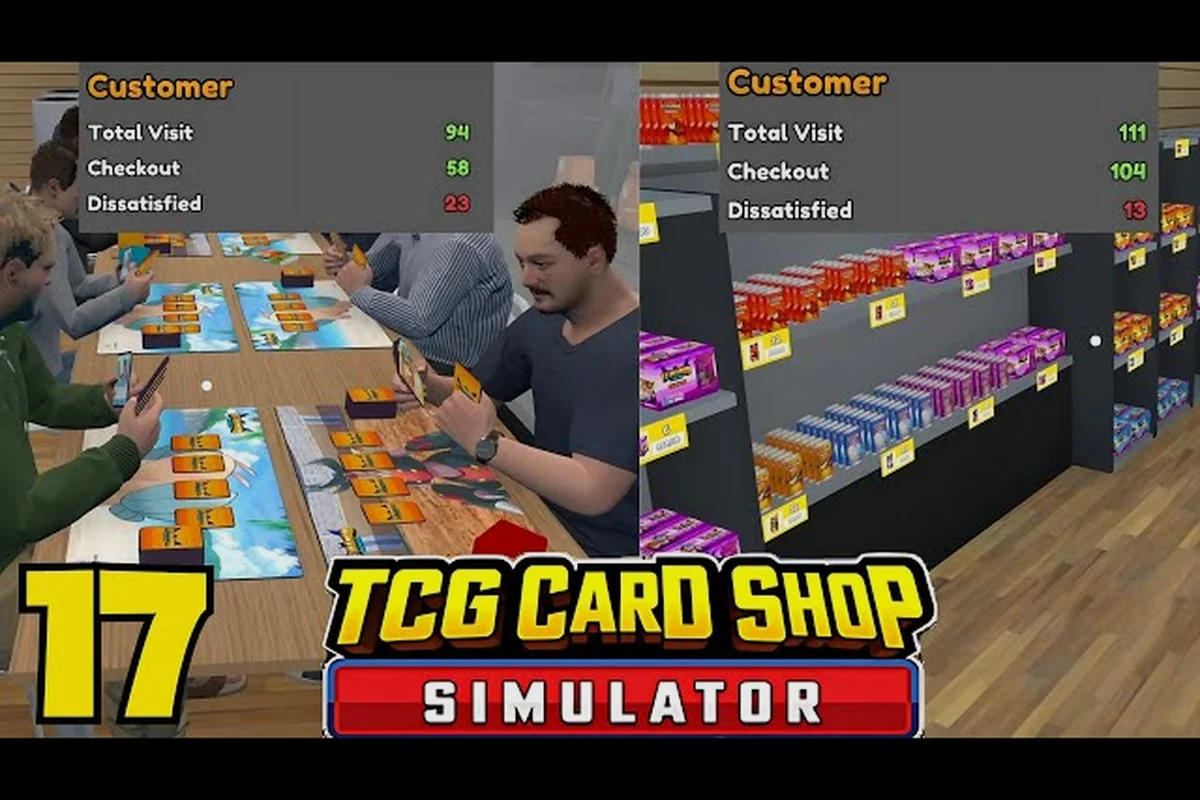
Every Tetramon tournament you run inside your shop swings a different set of card values, and that volatility is the single most reliable engine for TCG Card Shop Simulator table profit. Most clerks treat events as a flat rental-income line and miss the fact that the same booster you cracked an hour ago can spike 40% to 80% mid-event, which is why players who master timing consistently out-earn the average storefront. This guide breaks down how to read the price-pulse of every hosted format, ride TCG Card Shop Simulator price spikes on the right rarities, and turn TCG Card Shop Simulator hosting games into a daily revenue stream that compounds with your review score.
How Table Profit Actually Works in TCG Card Shop Simulator
Table profit is the sum of three income layers that all fire when customers sit down at a play surface. Rental fees are the obvious base, but the real upside comes from the market ripple each event creates and the indirect uplift on booster sales while the format is hot. According to the official TCG Card Shop Simulator on Steam store page, the simulation runs a full Tetramon economy with 4,436 cards, multiple event formats, and shop-state variables like cleanliness that feed back into your event yield.
Layering Table, Retail and Event Cash
| Layer | What It Is | When It Triggers | Typical Magnitude |
|---|---|---|---|
| Rental fee | Flat per-table payment from event players | On match completion | $30–$80 per table |
| Sell-high markup | Resale margin from inventory bought before the spike | While the event is active | +20% to +80% on affected rarities |
| Booster sell-through | Walk-in sales of freshly relevant packs | During and right after the event | 1.5×–3× normal hourly rate |
When a Sell High event lands, the rental fee is the smallest slice of what you actually bank. The two upper layers are where event price manipulation becomes a deliberate strategy rather than a lucky accident.
Why Review Score Multiplies the Result
Community testing posted to the Steam Workshop page notes that table income scales with average review score, which means cleanliness, pricing fairness, and shopper satisfaction feed directly back into event profit. A well-reviewed shop earns more from the same event than a neglected one, and the multiplier grows as you push from two-star averages toward the five-star ceiling. Treat the review meter as a profit dial, not a vanity stat.
Reading Event Formats and Their Price Ripples
Every hosted format in Tetramon tilts the market in a different direction, and the first step in stacking TCG Card Shop Simulator table profit is matching the right table setup to the right inventory bet. According to the community guides hub, twelve event formats exist, from the free Standard event that swings a random rarity both ways, through the cheap Pauper format that lifts commons while pushing rarer cards down, to the Fire, Earth, Water, and Wind element cups that boost one element and cut the element it beats.
Format Behavior at a Glance
| Format | Cost to Host | Rarity Bias | Element Bias | Sell-High Target |
|---|---|---|---|---|
| Standard | Free | Random ±1 tier | None | Whatever spiked that rotation |
| Pauper | Cheap | Commons ▲ / Rares ▼ | None | Common-tier singles |
| Element Cup: Fire | Medium | Neutral | Fire ▲ / Earth ▼ | Fire-tagged rares |
| Element Cup: Earth | Medium | Neutral | Earth ▲ / Wind ▼ | Earth-tagged rares |
| Element Cup: Water | Medium | Neutral | Water ▲ / Fire ▼ | Water-tagged rares |
| Element Cup: Wind | Medium | Neutral | Wind ▲ / Water ▼ | Wind-tagged rares |
| Premium / High-Entry | High | Legendary ▲ / Common ▼ | None | Legendary-tier holos |
The Standard format is the wild card: it can spike any rarity up or down, so the optimal move is to keep a balanced buffer of singles and react to the rotation that fires. The element cups, by contrast, are predictable enough to pre-stock, which is where most experienced clerks run their cleanest market manipulation plays.
Stacking Element Cup Runs
When you chain a Fire Cup followed immediately by a Water Cup, you are deliberately riding the Fire up → Fire down → Water up pattern, which lets you sell Fire singles at the Fire peak, then re-buy the same Fire cards at the trough before they normalize, and finally unload Water stock at its first spike. This kind of paired hosting is a core technique for anyone learning how to host TCG Card Shop Simulator events for profit, because each transition is a fresh sell window with zero downtime between rental payouts.
Timing the Spike: When to Buy and When to Dump
The TCG Card Shop Simulator market is not a flat line; it pulses on a predictable curve once an event is announced and you can map your buys and sells to the four phases of that pulse. This is the heart of TCG Card Shop Simulator market manipulation: the price action is deterministic enough to front-run if you watch the schedule.
The Four Phases of an Event Spike
| Phase | Timing | Price Behavior | Best Move |
|---|---|---|---|
| Pre-announce | 5–10 min before event opens | Quiet, normal pricing | Buy the predicted target rarity in bulk |
| Spike onset | First 5–10 min of event | Target rarity +40% to +80% | Sell half your position |
| Sustained peak | Middle of the event window | Elevated but slowly decaying | Sell remainder if demand is high |
| Post-event cool | After the format ends | Returns toward baseline | Re-buy for the next rotation |
The first two phases are where TCG Card Shop Simulator sell high event plays are made. Most clerks walk in during the sustained peak and wonder why the margin looks thin, because they bought at the same price everyone else is now selling at.
Sizing the Position
A common mistake is going all-in on a single high-rarity card. Community reports suggest a more stable mix for TCG Card Shop Simulator price spikes is roughly 60% mid-rarity, 25% high-rarity, and 15% commons paired to the format. The mid-rarity bucket carries the most reliable volume, the high-rarity bucket carries the biggest single-trade profit, and the commons keep cash flow moving between events. For a deeper look at how singles pricing flows across your broader storefront, the sell price economy guide walks through the TCG Price app and the daily expenses that eat into net margin.
Hosting Formats That Push Rare Cards to Peak Values
Not every format is worth your table space if the goal is to push the highest-value singles to their ceiling. Premium and high-entry events concentrate paying customers around legendary and mythic rarities, which is exactly the price band where TCG Card Shop Simulator event price manipulation produces the largest absolute dollar swing per card. Hosting a $200 entry-fee tournament with a stacked legendary prize pool will pull in grinders who pre-buy singles, which means your in-store inventory spikes on the rarities those decks need.
High-Yield Hosting Configurations
| Setup | Entry Fee | Expected Rarity Lift | Best Inventory to Stock |
|---|---|---|---|
| Premium Standard | $80–$120 | Random legendary spike | Mixed legendary buffer |
| Element Cup (hosted twice) | $40–$60 | +30% to +60% on the featured element | Element-tagged rares and holos |
| Pauper Marathon | $10–$20 | +20% on commons, soft rares | Bulk commons, low-tier uncommons |
| Sell High Showcase | $150+ | +50% to +100% on the announced target | Whatever the announcement names |
The Sell High Showcase is the most extreme version of this playbook. When the in-game ticker announces which rarity will spike, you have a short window to host a tournament themed around that rarity, charge a premium entry, and then sell your buffer of those cards at the peak. The format itself acts as both the spike trigger and the customer magnet.
Reading the Ticker
The in-game TCG Price app and the Manage Events app both surface the upcoming event rotation. Players who check the ticker at the top of every in-game hour report catching the pre-announce phase more than 70% of the time, which is more than enough lead to set up a clean buy-low / sell-high cycle. Pairing the ticker with the tournament hosting guide gives you the full loop from event announcement to XP-and-cash payout.
A Practical Daily Hosting Rotation
Theory is useful, but TCG Card Shop Simulator table profit only compounds if you run a repeatable daily loop. The loop below assumes a mid-game shop with at least three tables, a stocked singles shelf, and access to every event format. It front-loads cheap formats in the morning to build review score, then escalates to premium formats in the evening when the customer base is at its deepest and the rare-card market is most active.
Morning Block (Build Volume and Reviews)
-
Hour 1: Pauper event on Table 1. Cheap, fast, and pumps your review score through high match completion rates.
-
Hour 2: Standard event on Table 2. Free to host, so it functions as a pure customer-acquisition play while you watch for the random rarity spike.
-
Hour 3: Fire Cup on Table 3 if the rotation lines up with the TCG Price trend; otherwise repeat Standard.
Evening Block (Stack Rare-Card Profit)
-
Hour 4: Premium Standard with a $100 entry on Table 1. This is the format most likely to spike a legendary, and the entry fee filters for paying customers.
-
Hour 5: Element Cup featuring whichever element the ticker says is rising. Sell the buffer you built in the morning, then re-buy at the post-event dip.
-
Hour 6: Sell High Showcase if the announced rarity is legendary or higher. If not, host a second Element Cup to ride the residual spike.
| Block | Primary Goal | Typical Net Cash | Review Impact |
|---|---|---|---|
| Morning | Volume + reviews | $300–$600 | Strong positive |
| Evening | Rare-card markup | $700–$1,500 | Moderate positive |
| Daily total | Compounding profit | $1,000–$2,100 | Net +0.2 to +0.5 stars |
Tracking this loop day over day is what separates clerks who treat tables as decoration from clerks who treat them as a profit center. The event plays required breakdown is a useful companion for figuring out how many tables you actually need to run this loop without bottlenecking.
Where Table Income Leaks Away
Even experienced clerks leave money on the table when they slip into one of three predictable patterns. The first is hosting the same event every shift, which guarantees you will miss the rarity bias that drives the largest swings. The second is dumping inventory during the pre-announce phase, before the spike has actually started, which locks you out of the peak window. The third is ignoring cleanliness and pricing, because the review multiplier quietly compounds over a week of neglect and your per-table payout drifts downward without an obvious cause.
Quick Diagnostic Table
| Symptom | Likely Cause | Fix |
|---|---|---|
| Rental income feels flat every shift | Same format on repeat | Rotate through element cups and Standard |
| Markup window keeps closing before you sell | Selling during pre-announce | Hold until the spike onset phase |
| Payout slowly shrinks across the week | Review score drifting down | Run a Pauper block to rebuild stars |
| Legendary singles never hit peak | Hosting low-entry formats only | Add one Premium Standard per day |
Frequently Asked Questions
What is the fastest way to start earning TCG Card Shop Simulator table profit early on?
Host Pauper and Standard events back-to-back during your first two in-game hours. They are cheap or free to run, they pump your review score quickly, and they let you observe which rarities are starting to move before you commit real cash to a buffer. Once your review score clears three stars, add one Element Cup per day to start capturing sell-high markup on predictable spikes.
How does TCG Card Shop Simulator event price manipulation actually trigger a spike?
The spike is triggered by customer demand generated during the event itself. When a format biases toward a specific rarity or element, every player at the table starts hunting those cards, which pulls singles off your shelf faster than you can restock at normal pricing. The TCG Price app reflects the resulting scarcity in real time, and that is the window where you list your pre-bought buffer at peak markup.
Which event format produces the most reliable TCG Card Shop Simulator price spikes?
The Element Cups are the most reliable because their bias is announced upfront, which lets you pre-stock the affected element before the event opens. Premium Standard and Sell High Showcase events produce larger spikes, but the target rarity is randomized or announced only minutes before kickoff, which makes them higher variance and better suited as the second or third format in your daily rotation rather than your main earner.
Can TCG Card Shop Simulator hosting games really outperform booster resale for income?
Yes, once your shop is established. Booster resale scales linearly with how fast you crack packs, while hosting games scales with how cleverly you time your inventory against event demand. A clean daily rotation of three tables typically out-earns pure booster flipping by a factor of 1.5× to 2× because you collect the rental fee, the markup, and the booster sell-through in a single loop instead of relying on pack luck alone.
How do I avoid losing cash on a spike that never materializes?
Keep your position size conservative until you have logged at least one full in-game week of price observation, and never spend more than 25% of your liquid cash on a single pre-event buy. If the spike does not fire within the first ten minutes of the event window, cut the position at the current price rather than waiting for a recovery, because the cool phase will only push the value lower.